Call CA Tally HelpDesk
+91 9205471661,
7428779101
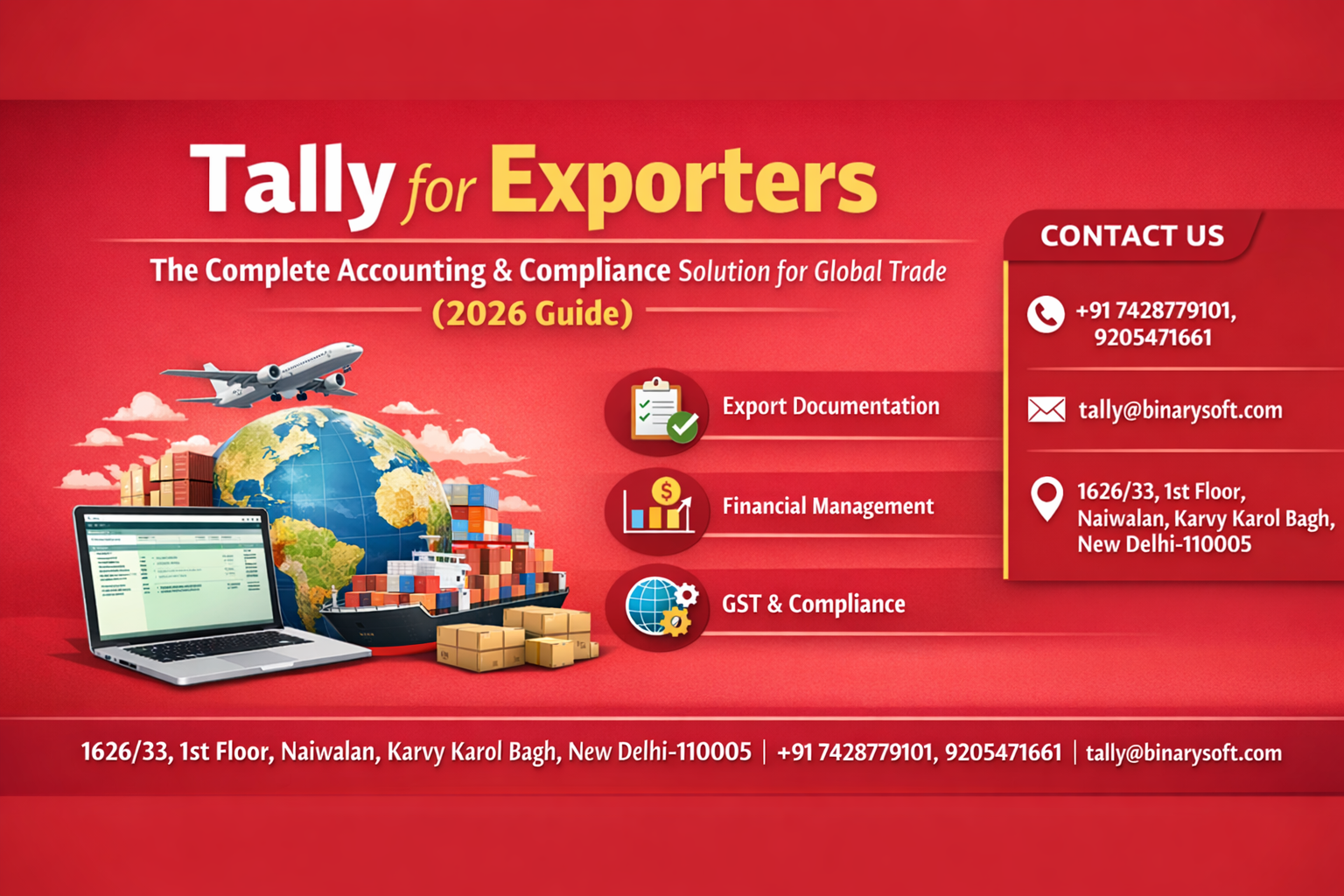
Export businesses in 2026 are navigating one of the most compliance-driven environments in recent years. Regulatory scrutiny has intensified, GST reporting expectations have become stricter, and global buyers now demand faster documentation and financial transparency. At the same time, fluctuating currency rates, complex tax structures, and tighter audit standards are putting pressure on exporters to maintain perfectly organized financial records. Manual accounting methods and disconnected software systems are no longer reliable in this fast-moving trade landscape.
What changed recently is the speed at which export transactions must be recorded, reconciled, and reported. Even a small documentation error can delay shipments or block payments. The benefit of adopting a structured accounting platform like Tally is clear: exporters gain real-time financial visibility, stronger compliance control, faster reporting, and reduced operational risk. In today’s competitive global market, smart accounting is no longer optional—it is a strategic advantage.
A Story That Mirrors Thousands of Export Businesses
A mid-sized textile exporter once celebrated securing a large international order. Production ran smoothly, goods were shipped on time, and the client was satisfied. But internally, the finance team struggled. Foreign currency invoices were tracked in spreadsheets, GST adjustments were handled manually, and bank reconciliation took days.
When payment finally arrived, a mismatch in currency conversion created confusion in profit calculations. What should have been a moment of growth turned into weeks of financial correction.
After moving to a structured accounting system, the company experienced a dramatic shift. Forex entries were recorded accurately, export documentation aligned with financial data, and management could see real-time profitability on each shipment. Instead of reacting to problems, the leadership began planning expansion into new markets.
This is the turning point many exporters face—growth demands financial precision.
Why Exporters Need Advanced Accounting in 2026
Export businesses operate in a multi-layered financial ecosystem. Unlike domestic trade, exporters must manage international invoices, tax compliance, logistics costs, banking regulations, and currency fluctuations simultaneously.
Common financial challenges include:
-
Managing foreign currency transactions
-
Handling GST on exports and related documentation
-
Tracking receivables from international buyers
-
Calculating accurate landed costs
-
Maintaining audit-ready records
-
Reconciling bank entries with forex variations
-
Monitoring shipment-wise profitability
Without structured accounting, these complexities quickly create financial blind spots.
How Tally Supports Modern Export Businesses
Tally is designed to simplify complex accounting workflows while providing the flexibility exporters require.
Accurate Foreign Currency Management
Exporters frequently invoice in dollars, euros, or other currencies. A strong accounting system records exchange rates correctly, adjusts for fluctuations, and ensures profit calculations remain accurate.
Streamlined GST Compliance
Export transactions often involve zero-rated supplies, refunds, and documentation requirements. Structured accounting helps maintain clarity and reduces the risk of compliance errors.
Real-Time Profitability Tracking
Understanding margins on each shipment is critical. With organized financial data, exporters can evaluate which markets, products, or clients generate the highest returns.
Faster Bank Reconciliation
International payments often include intermediary charges or rate differences. Automated reconciliation reduces delays and improves financial accuracy.
Audit-Ready Financial Records
Clean ledgers and properly recorded transactions simplify audits and strengthen business credibility with financial institutions.
Key Benefits Exporters Experience
Stronger Financial Control
Leadership gains immediate access to revenue, expenses, and outstanding payments, enabling faster decisions.
Reduced Operational Risk
Automation minimizes manual errors that could otherwise result in compliance penalties or financial misstatements.
Improved Cash Flow Visibility
Knowing exactly when payments are expected helps exporters manage working capital more effectively.
Better Decision-Making
Accurate data supports pricing strategies, vendor negotiations, and expansion planning.
Scalability for Growing Trade Volumes
As export orders increase, accounting complexity rises. A structured system ensures growth remains manageable.
Managing Documentation Without Stress
Documentation is the backbone of export operations. Invoices, shipping bills, packing lists, tax records, and bank documents must align perfectly.
Disorganized records can cause:
-
Shipment delays
-
Payment hold-ups
-
Audit complications
-
Regulatory scrutiny
A centralized accounting framework ensures financial and operational data stay synchronized.
Navigating Currency Volatility
Currency fluctuations can significantly impact exporter profitability. Even minor exchange rate differences affect margins when transaction volumes are high.
With structured accounting:
-
Exchange gains and losses are recorded accurately
-
Financial statements reflect true performance
-
Forecasting becomes more reliable
This clarity protects exporters from unpleasant financial surprises.
Warning Signs Your Export Business Needs Smarter Accounting
Many exporters continue with outdated systems until inefficiencies become costly. Watch for these indicators:
-
Frequent reconciliation delays
-
Difficulty calculating shipment profitability
-
Manual tracking of forex transactions
-
Compliance anxiety during tax filings
-
Limited visibility into receivables
-
Overdependence on spreadsheets
If these issues persist, modernization should be a priority.
Leadership, Strategy, and Financial Clarity
Global trade rewards businesses that move quickly and make informed decisions. Financial clarity enables exporters to:
-
Enter new markets confidently
-
Adjust pricing based on real costs
-
Manage risk effectively
-
Strengthen investor and lender confidence
Accounting is no longer just a back-office function—it is a strategic driver.
Preparing Export Businesses for a Digital Future
International trade is becoming increasingly digital. Buyers expect faster invoicing, regulators expect transparent records, and financial institutions favor well-documented businesses.
Exporters who modernize their accounting infrastructure position themselves for:
-
Sustainable growth
-
Stronger compliance posture
-
Higher operational efficiency
-
Greater resilience during market fluctuations
The future belongs to exporters who combine operational excellence with financial discipline.
Conclusion
In 2026, exporting is not just about moving goods across borders—it is about managing financial complexity with precision. Compliance expectations are higher, currency risks are real, and global competition is intense.
A structured accounting solution like Tally empowers exporters with real-time visibility, stronger compliance, and dependable financial control. From managing foreign currency transactions to ensuring audit readiness, it transforms accounting into a strategic advantage.
Exporters who invest in smarter financial systems today build a foundation for confident expansion tomorrow. In global trade, clarity is power—and strong accounting delivers it.
Frequently Asked Questions
Can accounting software handle multiple currencies?
Yes. Modern systems record exchange rates, track gains or losses, and maintain accurate financial statements.
Is specialized accounting necessary for exporters?
Yes. Export transactions involve foreign currency, regulatory requirements, and complex documentation that demand structured financial management.
How does structured accounting improve compliance?
Organized records reduce errors, simplify filings, and ensure documentation aligns with regulatory expectations.
Will automation help reduce financial errors?
Significantly. Automated processes minimize manual intervention and improve accuracy.
CA. Shivesh Khandelwaal is a practicing Chartered Accountant experienced in accounting automation, compliance management, and audit support. He has worked with trading and distribution businesses to improve inventory visibility and financial reporting. His articles focus on real-world applicability.