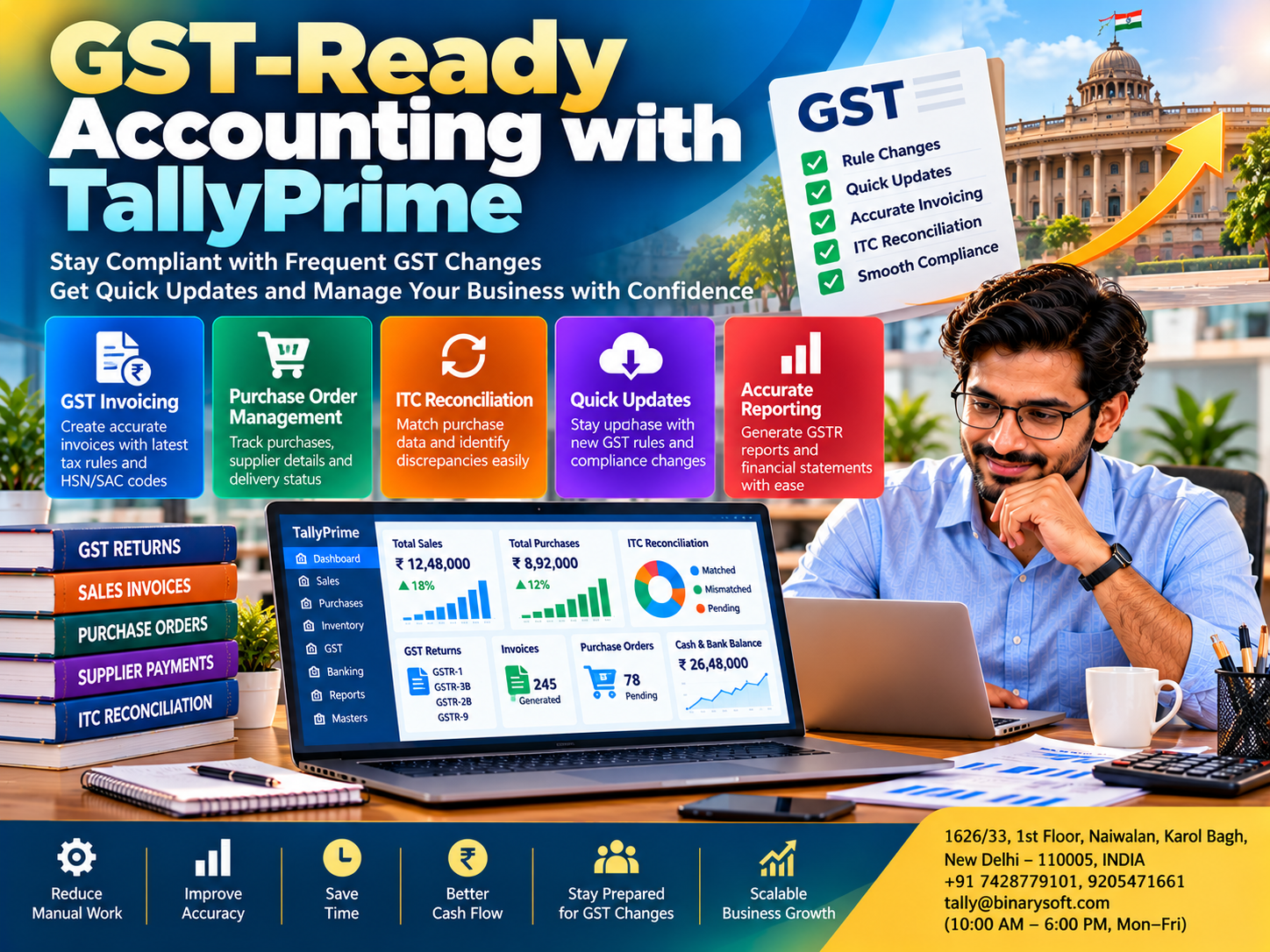
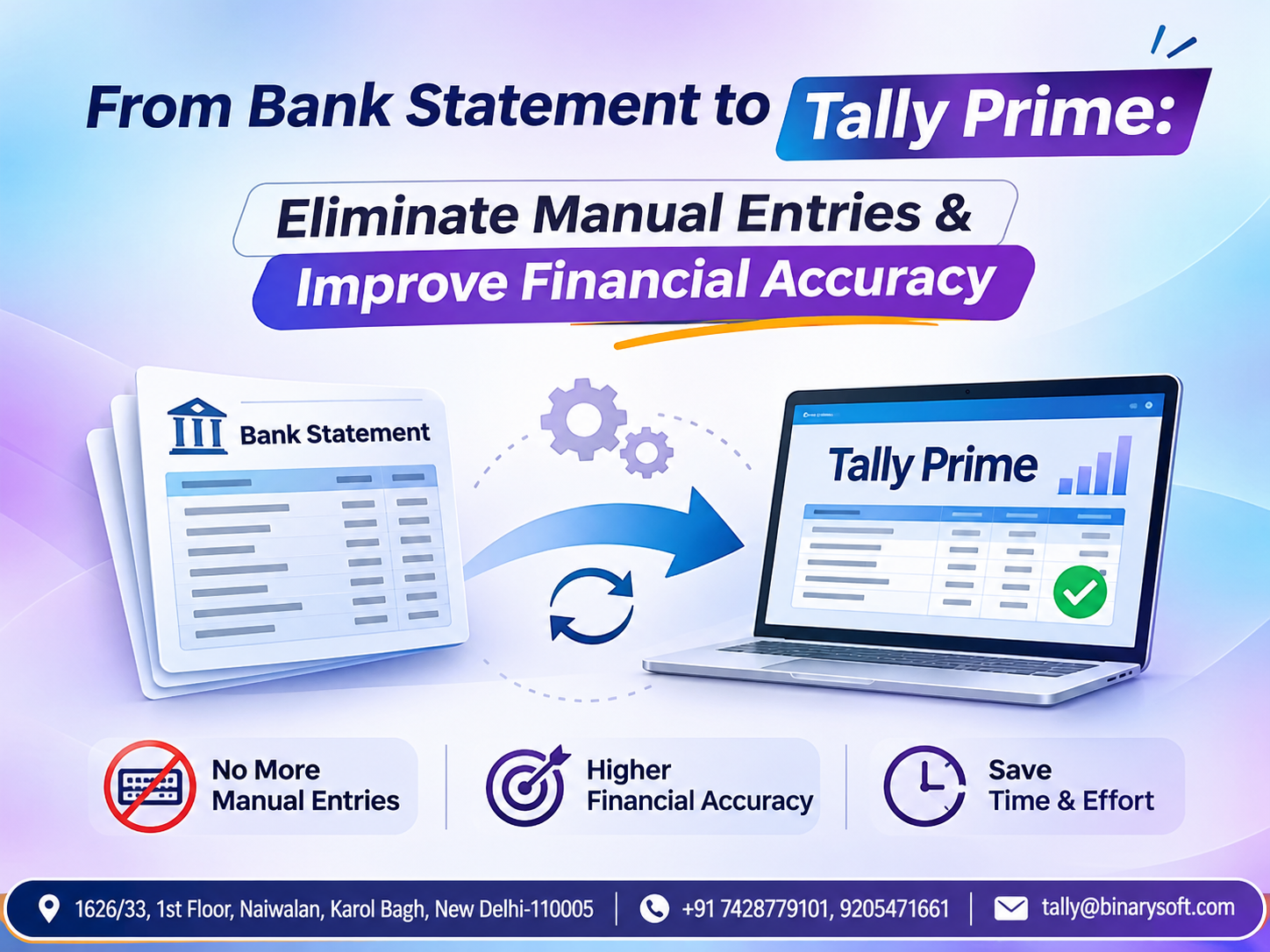
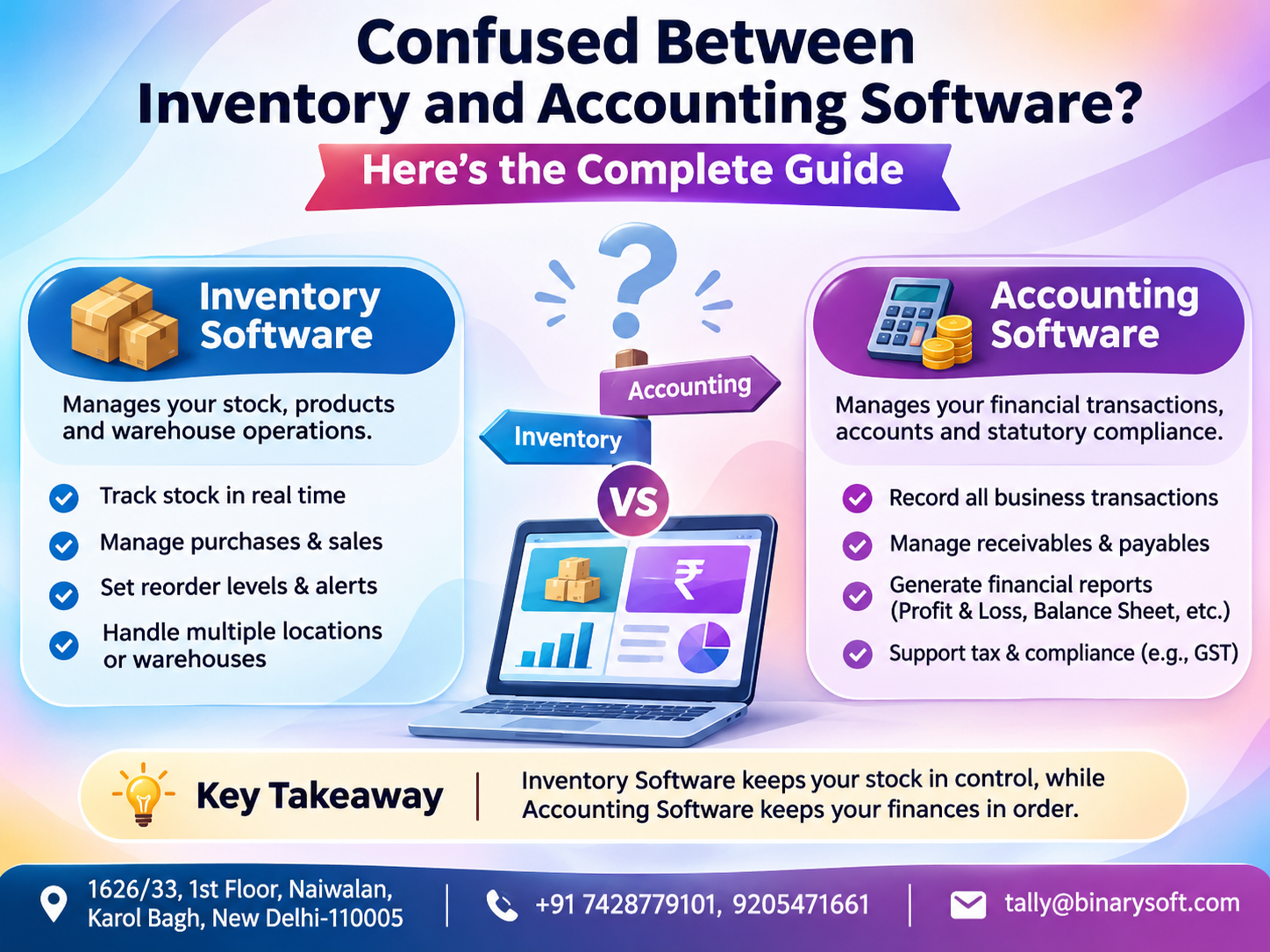
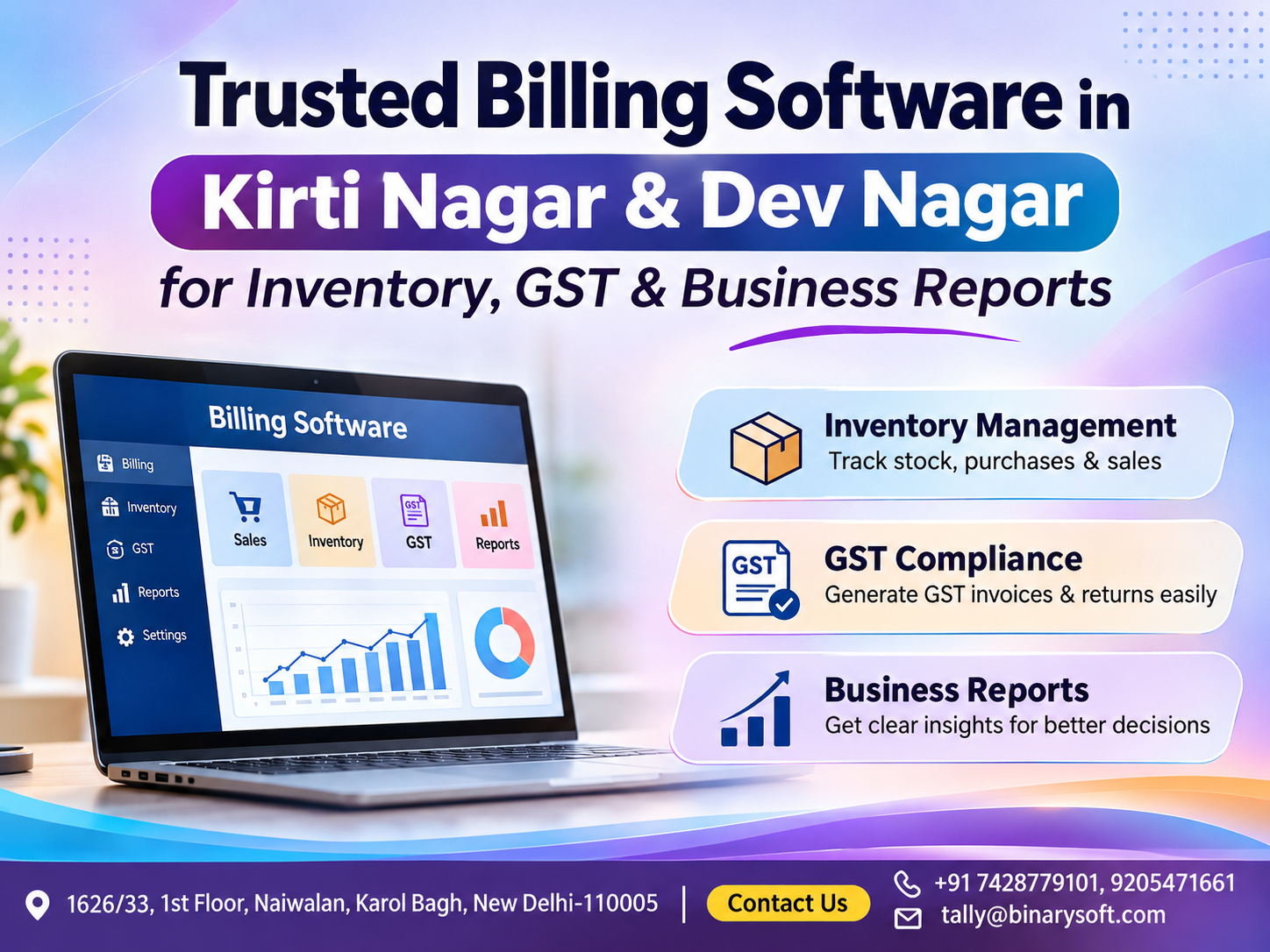
Introduction: Why GST-Ready Accounting Software Is Essential for Indian Businesses
Running a business in India requires much more than recording sales and purchases. Entrepreneurs must also manage GST invoices, tax classifications, input tax credit, supplier compliance, return preparation and changing statutory requirements.
A business may process hundreds of invoices every week. Even a small change in GST rules, invoice reporting requirements or tax classifications can affect accounting procedures.
When businesses rely on outdated software or disconnected spreadsheets, implementing changes can become difficult.
Incorrect tax calculations may require invoice corrections. Missing supplier information can delay reconciliation. Unresolved differences between accounting records and GST portal data can increase compliance workloads.
In 2026, businesses need accounting systems that are not only capable of recording GST transactions but are also adaptable to regulatory developments.
Resilient GST accounting software combines timely updates, accurate data, reliable reporting and well-defined compliance processes.
TallyPrime provides GST-related invoicing, accounting, reporting and connected functionality that can support Indian businesses in managing these responsibilities.
However, no software can guarantee compliance automatically. Businesses must still review notifications, install appropriate updates, verify tax classifications and maintain accurate records.
This guide explains how to choose adaptable GST accounting software and use TallyPrime to strengthen financial management.
1. What Does GST-Resilient Accounting Software Mean?
GST-resilient accounting software is designed to remain useful when tax rules, reporting formats and compliance procedures change.
Resilience does not mean that software automatically understands every new government notification.
Instead, it means the system has features, support arrangements and update mechanisms that help businesses adapt with less disruption.
Important characteristics
-
Regular software maintenance and relevant statutory updates.
-
Configurable GST rates and tax classifications.
-
Accurate invoice and accounting records.
-
GSTIN and transaction information validation.
-
Support for applicable e-invoicing and e-way bill processes.
-
Input tax credit reconciliation capabilities.
-
GST-related exception reporting.
-
Reliable backup and data protection.
-
Access to implementation assistance and technical support.
-
Clear procedures for verifying changes before deployment.
A business should evaluate these capabilities before selecting accounting software.
2. An Emotional Story: The Business Owner Who Feared a GST Notice More Than Losing a Sale
At 8:15 PM, Sunil was sitting alone inside his textile wholesale office in Gandhi Nagar, Delhi.
His employees had already left, and the shutters of nearby shops were closing.
On his desk were supplier invoices, purchase registers and a spreadsheet showing differences between accounting records and GST-related information.
Sunil had inherited the business from his father.
For more than twenty years, the family had built strong relationships with retailers by offering dependable products and fair prices.
However, accounting responsibilities had become increasingly demanding.
The company was processing more transactions, working with additional suppliers and dealing with changing compliance procedures.
One afternoon, Sunil received a communication from his accountant requesting urgent clarification about several purchase invoices.
Some supplier details did not match the available GST records.
Others required additional verification before the related input tax credit position could be finalized.
Sunil felt anxious.
His father had always told him that a business could recover from a slow sales season, but rebuilding lost trust was much harder.
That evening, Sunil's son asked why he seemed worried.
Sunil replied, "I am trying to make sure everything we have built remains safe."
He realized that the business needed more reliable accounting procedures.
The company reorganized its supplier masters, reviewed GST classifications and adopted structured accounting processes using TallyPrime.
Employees received training on invoice verification and transaction entry.
The accounts department established periodic reconciliation procedures and a checklist for reviewing software updates and compliance changes.
Gradually, accounting differences became easier to investigate, and financial information became more organized.
Sunil still understood that GST compliance required professional attention.
But he no longer felt that every reporting period was an unpredictable emergency.
For him, the greatest benefit of better technology was peace of mind.
This fictional story illustrates common compliance pressures faced by Indian business owners.
3. Why Frequent GST Changes Create Challenges for Businesses
GST compliance involves several interconnected activities.
Changes may affect tax rates, classifications, reporting requirements, return processes or technology-based validations.
Even when a change appears small, it can influence multiple accounting procedures.
Tax classification difficulties
Businesses must identify the appropriate HSN or SAC classification and applicable tax treatment.
Invoice configuration changes
New or revised reporting requirements may affect invoice preparation and validation.
Input tax credit reconciliation
Businesses need to compare purchase records with relevant GST information and investigate discrepancies.
E-invoicing applicability
Eligible taxpayers must comply with applicable electronic invoicing requirements.
Return preparation
Accounting records must be reviewed and reconciled before relevant GST returns are filed.
Employee training
Staff members must understand how changes affect their daily work.
Businesses using adaptable software and consistent procedures can respond more effectively to these challenges.
4. How TallyPrime Helps Businesses Adapt to GST Requirements
TallyPrime is designed for accounting, inventory management and statutory-related business processes.
Its GST capabilities help businesses maintain transaction records and prepare information required for compliance.
GST invoicing
Businesses can create invoices with applicable tax classifications, customer details and relevant statutory information.
Tax rate configuration
GST rates can be configured for appropriate transactions and stock items.
Businesses must verify the correct rate and effective date before making changes.
GST reporting
TallyPrime provides GST-related reports that help users review transaction information and identify potential discrepancies.
Input tax credit reconciliation
Supported releases include connected GST and reconciliation functionality that can help compare purchase records with downloaded GST information.
E-invoicing and e-way bills
Eligible businesses can use supported functionality for relevant electronic invoicing and e-way bill workflows.
Software updates
New releases and maintenance updates may introduce statutory enhancements, validations and usability improvements.
Businesses should review release notes, verify compatibility and maintain backups before installing updates.
Important: A new GST notification does not necessarily require a software update. Some changes can be addressed through correct configuration, while others may require revised software functionality.
5. The Importance of Timely GST Software Updates
Accounting software updates help businesses respond to changing technical and statutory requirements.
Updates may introduce revised validations, reporting enhancements, transaction corrections or compatibility improvements.
However, businesses should distinguish between three different situations.
Legal changes: Government notifications or amendments change applicable obligations.
Portal changes: GST systems introduce new technical validations, interfaces or workflows.
Software changes: Accounting applications introduce functionality to support relevant requirements.
These developments do not always occur simultaneously.
A reliable compliance process should therefore include monitoring official announcements, understanding effective dates and checking whether existing software functionality remains suitable.
Businesses should avoid assuming that every software release changes their legal obligations.
6. GST Invoice Accuracy: The First Step Toward Compliance
Accurate invoices are essential because they influence sales records, tax reporting and customer reconciliation.
Businesses should verify customer GSTIN information, supply details, HSN or SAC classifications, taxable values and applicable tax rates.
TallyPrime allows users to maintain relevant accounting masters and create GST-related invoices.
Illustrative invoice calculation
Assume a taxable intra-state sale worth ₹1,00,000 with an applicable GST rate of 18%.
|
Particulars
|
Amount
|
|---|
|
Taxable value
|
₹1,00,000
|
|
CGST at 9%
|
₹9,000
|
|
SGST at 9%
|
₹9,000
|
|
Total invoice value
|
₹1,18,000
|
This is only an illustration. The correct rate and tax treatment must be determined for the actual supply.
When tax rules change, businesses should review affected items and services rather than applying a single rate across all transactions.
7. Input Tax Credit Reconciliation and Supplier Compliance
Input tax credit is an important consideration for GST-registered businesses.
However, purchase entries in accounting software do not automatically establish eligibility for ITC.
Businesses must satisfy applicable legal conditions and review relevant supplier-reported information.
TallyPrime's supported GST reconciliation features can assist in comparing purchase records with available GST data.
Common differences
-
Supplier invoices missing from downloaded information.
-
Incorrect invoice numbers or dates.
-
Differences in taxable values.
-
GSTIN mismatches.
-
Credit notes requiring review.
-
Duplicate purchase entries.
-
Transactions requiring further eligibility assessment.
A structured reconciliation process helps businesses identify these issues before finalizing their GST position.
8. Case Study One: A Delhi Electronics Distributor Improves GST Reconciliation
Illustrative case study based on common distribution-sector accounting challenges.
Business background
An electronics distributor in Nehru Place, Delhi, purchased products from numerous suppliers and sold them to retailers and corporate customers.
The company processed hundreds of purchase invoices each month.
Challenges
Supplier invoices were received through email, messaging applications and physical documents.
The accounts department maintained purchase records in spreadsheets and periodically compared them with available GST information.
Differences were often identified close to reporting deadlines.
Solution using TallyPrime
The company standardized supplier masters and introduced structured purchase accounting.
Relevant GST functionality was configured in TallyPrime, and the accounts team established a regular reconciliation schedule.
Employees reviewed unmatched invoices and contacted suppliers when clarification was necessary.
Illustrative outcomes
Purchase records became easier to organize and verify.
The company reduced dependence on last-minute spreadsheet consolidation and improved visibility into unresolved reconciliation differences.
Key learning
Regular reconciliation and accurate supplier information are more dependable than waiting until a filing deadline to investigate discrepancies.
9. Case Study Two: A Manufacturing MSME Strengthens GST Update Readiness
Illustrative case study demonstrating practical compliance management.
Business background
A manufacturing enterprise in Faridabad supplied industrial components to customers across several Indian states.
Its accounting team managed purchases, sales, inventory and GST-related records.
Challenges
The company relied on outdated procedures and occasionally delayed reviewing software releases.
Employees were uncertain whether new compliance requirements affected existing invoice configurations.
Solution
Management introduced a formal update and compliance review process.
TallyPrime was maintained on a supported release, and accounting masters were reviewed periodically.
The company also established a checklist for testing important transactions after relevant updates.
Illustrative outcomes
Employees developed a clearer process for responding to software and compliance changes.
Management gained greater confidence in the consistency of accounting records and reporting procedures.
Key learning
Software maintenance, employee training and periodic compliance reviews are essential parts of GST readiness.
10. Comparing GST Accounting Software Solutions
Different businesses require different levels of functionality.
|
Software category
|
Main advantage
|
Important consideration
|
|---|
|
Spreadsheet-based accounting
|
Low initial complexity
|
High dependence on manual verification
|
|
Basic GST billing software
|
Invoice preparation
|
May offer limited financial reporting
|
|
Cloud accounting software
|
Remote accessibility
|
Check statutory updates and data security
|
|
TallyPrime
|
Integrated accounting, inventory and GST functionality
|
Requires correct configuration and updates
|
|
Enterprise ERP platforms
|
Wider departmental integration
|
Higher implementation complexity
|
The best choice is a system that supports the company's transaction volume, statutory obligations, employee capabilities and future growth.
11. How to Keep TallyPrime Prepared for GST Changes
Businesses should establish a repeatable compliance maintenance process.
Step 1: Review official changes. Identify applicable notifications, effective dates and portal advisories.
Step 2: Check the installed release. Determine whether the current TallyPrime version supports the required functionality.
Step 3: Back up company data. Maintain a verified backup before significant updates or configuration changes.
Step 4: Review GST masters. Verify GSTIN details, HSN/SAC classifications, tax rates and relevant ledger settings.
Step 5: Test representative transactions. Check purchase invoices, sales invoices, credit notes and interstate transactions where applicable.
Step 6: Reconcile GST information. Compare accounting records with relevant portal information and investigate differences.
Step 7: Train employees. Explain revised procedures to billing and accounting personnel.
Step 8: Document the changes. Maintain an internal record of updates, approvals and tests.
This process helps prevent confusion when multiple regulatory and software changes occur during a financial year.
12. How GST Accounting Software Supports Better Financial Management
GST compliance and financial management are closely connected.
Incorrect purchase records can affect supplier balances. Sales invoice errors can create customer disputes. Unreconciled tax accounts may distort management's understanding of liabilities.
TallyPrime connects relevant accounting and inventory transactions, enabling businesses to review GST-related information alongside financial reports.
Management can monitor sales, purchases, outstanding balances, cash flow and tax-related accounts.
This improves financial visibility, although accurate reporting still depends on correct transaction entry and periodic verification.
13. Common Mistakes Businesses Should Avoid
Businesses should avoid assuming that updated software guarantees correct GST returns.
Other common mistakes include using outdated tax classifications, ignoring reconciliation differences, failing to verify supplier information and changing GST settings without considering effective dates.
Another important risk is updating software without first checking backups and compatibility with existing integrations.
A reliable accounting process combines technology, internal controls and professional review.
14. The Future of GST Accounting Software in India
GST accounting systems are becoming increasingly connected with digital invoicing, return preparation and reconciliation processes.
Businesses can expect continued emphasis on structured transaction data, stronger validations and improved interoperability between accounting applications and statutory platforms.
However, future functionality should not be confused with capabilities already available in every software release.
Indian businesses should prioritize accurate data, supported software, reliable backups and employees who understand the relevant compliance procedures.
Conclusion: Choose GST Accounting Software That Can Adapt as Your Business Grows
Frequent GST changes can create uncertainty for businesses that depend on manual accounting or outdated systems.
Adaptable software helps organizations maintain consistent invoicing, accurate purchase records, reliable reconciliation and stronger financial reporting.
TallyPrime provides useful functionality for GST-related accounting, invoicing, inventory management, banking and business reporting.
Its effectiveness depends on suitable configuration, supported updates, accurate records and regular compliance reviews.
For Indian MSMEs, the goal should not simply be to find software that receives updates quickly.
The goal is to build a dependable accounting process that remains accurate, organized and adaptable as business and regulatory requirements evolve.
Powered by Binarysoft Technologies
Authorized Tally Partner
Location: 1626/33, 1st Floor, Naiwalan, Karol Bagh, New Delhi – 110005, INDIA
Contact us: +91 7428779101, 9205471661
Email us: tally@binarysoft.com (10:00 AM – 6:00 PM, Mon–Fri)