Call CA Tally HelpDesk
+91 9205471661,
7428779101

Why Efficient Business Operations Matter More Than Ever
Running a successful business requires more than selling products and generating revenue. Behind every profitable organization lies a well-managed system of purchases, sales, customer payments, inventory and financial accounting.
For many Indian small and medium-sized businesses, managing these operations remains challenging. Purchase records are maintained in spreadsheets, sales invoices are prepared separately, customer payments require constant follow-up, and accounting entries consume valuable working hours.
When information is scattered across different systems, business owners struggle to understand their financial position.
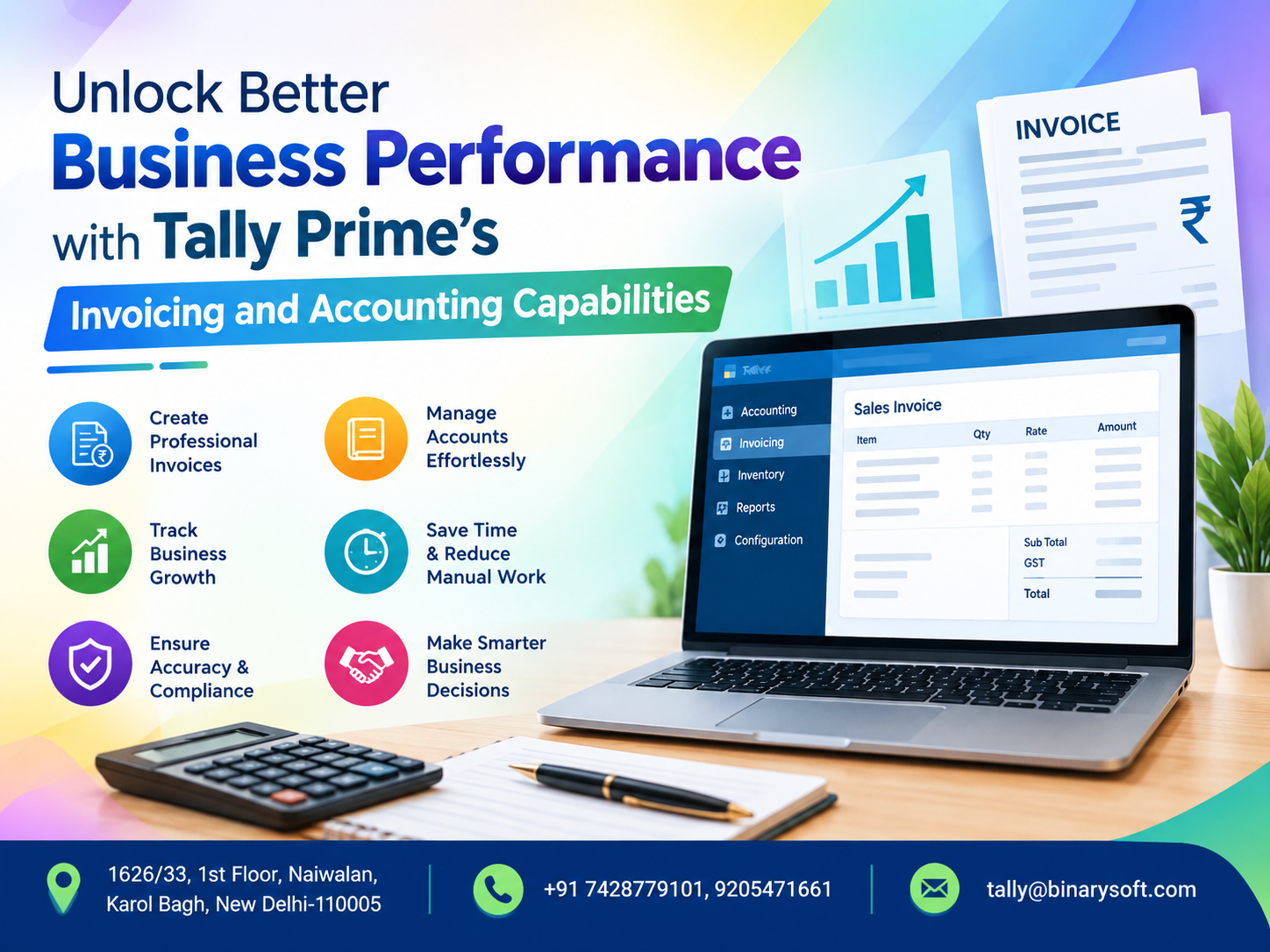
Tally Prime offers an integrated business management solution that connects purchasing, sales, inventory, receivables and accounting within a single platform.
Instead of spending hours reconciling transactions, businesses can focus on improving customer relationships, controlling expenses and identifying growth opportunities.
Whether you operate a retail shop, wholesale distribution business, manufacturing company or service organization, Tally Prime can help simplify everyday financial operations.
This guide explains how businesses can use Tally Prime to manage purchases, monitor sales, track customer payments, automate accounting activities and improve overall operational efficiency.
1. The Hidden Challenges of Managing Daily Business Operations
Every business processes multiple financial transactions throughout the day.
A distributor purchases inventory from suppliers, sells products to retailers, receives customer payments and settles outstanding vendor bills.
A manufacturer purchases raw materials, monitors production expenses, sells finished products and calculates profitability.
A service provider raises invoices, tracks client payments and manages operating expenses.
Although these activities appear straightforward, managing them manually creates several difficulties.
Common Operational Challenges
Disconnected purchase and sales records
When purchase information and sales transactions are maintained separately, calculating actual stock availability becomes difficult.
Delayed customer payments
Without organized outstanding reports, businesses may overlook overdue invoices and experience cash flow shortages.
Incorrect accounting entries
Manual data entry increases the possibility of duplicate transactions, incorrect ledger postings and reconciliation differences.
Limited financial visibility
Business owners may not know which customers owe money, which products generate profits or which suppliers require immediate payment.
Time-consuming reporting
Preparing sales summaries, purchase registers, outstanding statements and financial reports manually can consume several hours.
These challenges demonstrate why integrated accounting software has become essential for growing businesses.
2. How Tally Prime Connects Business Operations
Tally Prime provides a unified environment for managing accounting, inventory and financial transactions.
Its integrated structure allows related business activities to update relevant records through properly configured vouchers.
For example, when a business records an inventory sales invoice, Tally Prime can update the customer's ledger, sales accounts, applicable tax ledgers and inventory balances.
Similarly, recording a purchase invoice can update supplier balances, purchase accounts, tax records and stock information.
This integration reduces duplicate data entry and helps maintain consistent financial records.
Major Business Operations Supported by Tally Prime
-
Purchase orders, purchase invoices and supplier accounting.
-
Sales orders, sales invoices and customer management.
-
Inventory monitoring and stock valuation.
-
Customer receivables and supplier payables.
-
Bank transactions and reconciliation.
-
GST accounting and related reporting.
-
Financial statements and business performance analysis.
-
Cost centre accounting and expense monitoring.
By managing these activities together, businesses can improve accuracy and reduce administrative effort.
3. Seamless Purchase Management in Tally Prime
Purchasing is one of the most important activities affecting business profitability.
Poor purchase planning can lead to excess inventory, unnecessary expenses, supplier disputes and working capital shortages.
Tally Prime helps businesses organize their procurement processes and maintain reliable purchase records.
Creating and Managing Purchase Orders
Businesses can create purchase orders containing essential information such as supplier details, products, quantities, rates and delivery requirements.
Purchase orders provide a structured reference for monitoring procurement commitments.
They also help businesses compare ordered quantities with goods received and invoices recorded.
Recording Purchase Invoices
Once goods are purchased, the transaction can be recorded using a purchase voucher.
Depending on the business configuration, the purchase entry can include:
-
Supplier ledger and invoice reference.
-
Product quantities and purchase rates.
-
Applicable GST details.
-
Additional purchase expenses.
-
Inventory allocation and storage location.
-
Credit period and payment terms.
Proper purchase recording helps maintain accurate supplier balances and inventory values.
Managing Supplier Outstanding Payments
Tally Prime allows businesses to monitor amounts payable to suppliers.
Supplier outstanding reports help identify unpaid bills and support better payment planning.
Businesses can review bill-wise balances, settlement status and outstanding amounts.
Benefits of Organized Purchase Management
Efficient purchasing helps reduce unnecessary procurement, improve supplier relationships, maintain stock availability and control working capital.
For growing businesses, these improvements can directly influence profitability.
4. Improve Sales Tracking and Revenue Visibility
Sales represent the primary revenue source for most businesses.
However, recording invoices alone does not provide a complete understanding of sales performance.
Business owners need visibility into customer purchases, product movement, outstanding invoices and revenue trends.
Tally Prime supports these requirements through integrated sales accounting and reporting.
Creating Professional Sales Invoices
Businesses can generate sales invoices containing customer information, product descriptions, quantities, rates, discounts and applicable taxes.
Depending on configuration, invoices may also include payment terms, delivery details and additional charges.
Managing Sales Orders
Sales orders help businesses record customer requirements before invoicing.
They are particularly useful for wholesalers, distributors and businesses handling advance bookings.
Sales orders can help teams monitor pending commitments and plan inventory availability.
Tracking Product-Wise Sales
Tally Prime provides inventory-related reports that help businesses evaluate stock movement and sales performance.
Business owners can analyze which products sell frequently and which items remain unsold for extended periods.
This information supports better purchasing decisions.
Monitoring Customer-Wise Sales
Customer ledger reports and sales registers help businesses review transactions associated with individual customers.
Businesses can identify important customers, examine purchasing patterns and evaluate outstanding balances.
Why Sales Tracking Matters
Accurate sales tracking helps organizations improve revenue visibility, monitor customer relationships, identify product demand and make informed business decisions.
5. Customer Payment Management: Protecting Business Cash Flow
A business may generate substantial sales but still experience financial difficulties when customers delay payments.
This is particularly common among wholesalers, distributors, manufacturers and service providers operating on credit.
Customer payment management is therefore essential for maintaining healthy working capital.
Track Outstanding Customer Invoices
Tally Prime provides receivables reports that help businesses monitor unpaid customer bills.
These reports can show outstanding amounts, bill references and payment status.
Businesses can use this information to prioritize collection activities.
Manage Credit Periods
Customer credit periods can be maintained through appropriate ledger and bill-wise accounting configurations.
This helps businesses understand expected payment dates and identify overdue transactions.
Record Customer Receipts
When customers make payments, businesses can record receipt vouchers against the relevant customer ledgers.
Bill-wise adjustment helps identify which invoices have been settled and which remain outstanding.
Support Payment Follow-Ups
Outstanding reports provide useful information for preparing customer payment reminders.
Businesses can use these reports to contact customers professionally and resolve payment delays.
Example of Better Payment Visibility
Consider a distributor with monthly credit sales of ₹12,00,000.
If customers delay payments by an average of 15 additional days, approximately ₹6,00,000 of extra receivables may remain tied up, assuming sales occur evenly throughout the month.
Improving collection discipline can reduce this working capital pressure.
The objective is not simply to increase sales but to ensure that sales are converted into timely cash receipts.
6. Accounting Automation in Tally Prime
Accounting automation reduces repetitive work and helps businesses maintain more consistent financial records.
Traditional accounting processes often involve entering the same transaction into multiple registers.
Tally Prime simplifies this through integrated voucher-based accounting.
Automatic Ledger Updates
When transactions are recorded correctly, the relevant ledgers and reports reflect those entries without requiring separate manual posting.
For example, a credit sales invoice can update the sales account, customer balance and applicable tax accounts.
Integrated Inventory Accounting
Inventory-related purchase and sales vouchers can update stock records alongside accounting information.
This helps reduce differences between inventory reports and financial transactions.
Bank Reconciliation
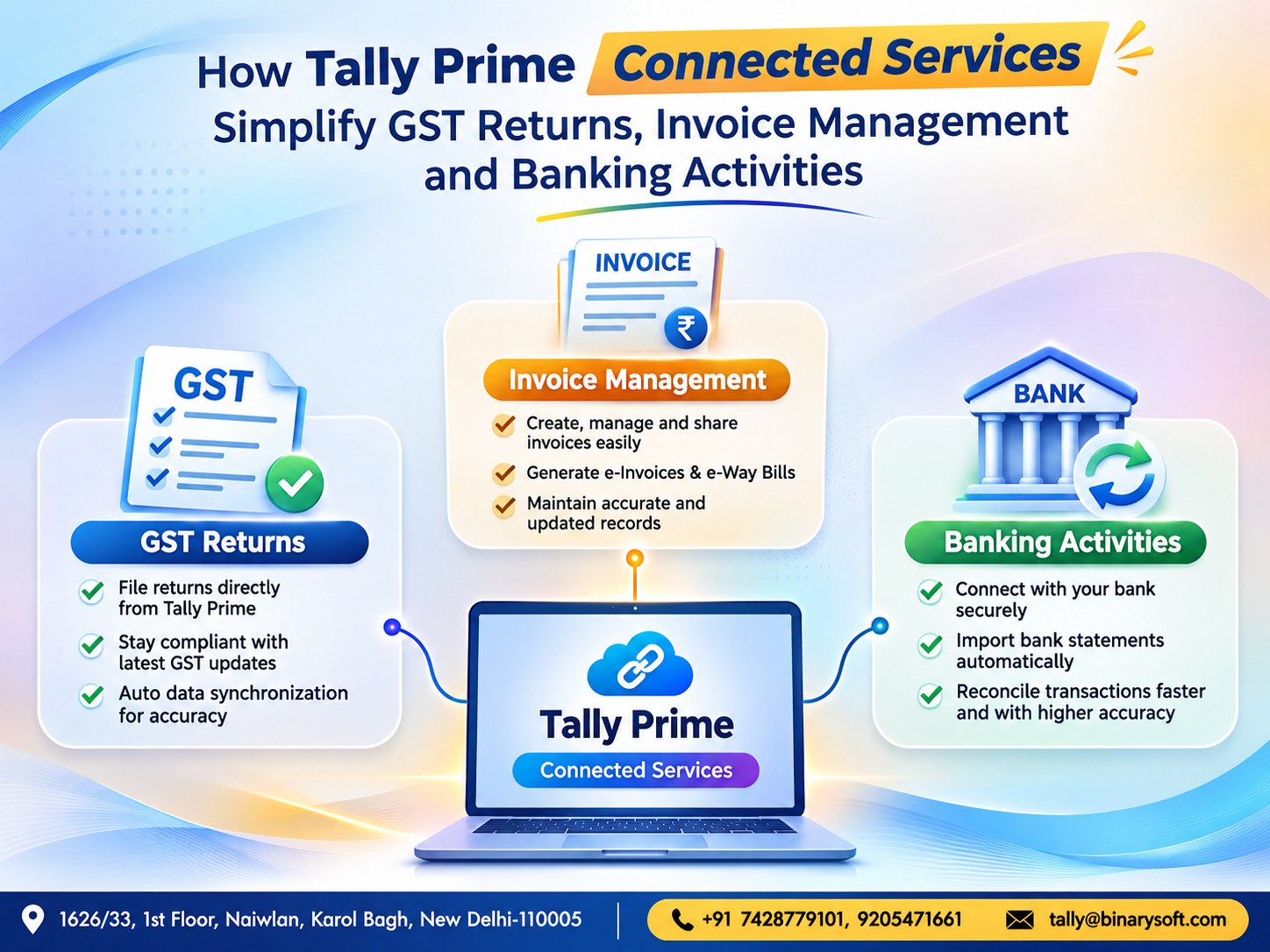
Tally Prime provides banking and reconciliation features that help businesses compare recorded transactions with bank information.
Available capabilities depend on the product release, bank support and configuration.
Recurring Accounting Activities
Voucher templates, predefined masters and other supported features can simplify repetitive accounting activities.
Businesses can standardize transaction recording to reduce manual effort.
Financial Report Generation
Once transactions are properly entered, Tally Prime can generate reports such as:
These reports support daily monitoring and financial decision-making.
7. A Story of Business Transformation: When Better Accounting Restored Peace of Mind
For nearly twelve years, Rajesh had managed a small electrical goods distribution business in Delhi.
His business had loyal customers, reliable suppliers and steady monthly sales.
Yet every evening, Rajesh returned home carrying the same worry.
He could not confidently answer three simple questions.
How much money did customers owe him?
Which suppliers needed payment next?
How much stock was actually available in his warehouse?
His employees maintained sales invoices in one spreadsheet, purchase details in another and customer payments in a handwritten register.
Sometimes payments were received but not immediately updated.
Occasionally, products were ordered even though sufficient inventory was already available.
One evening, Rajesh's daughter asked why he continued working after dinner.
He smiled but had no answer.
He realized that although his business was growing, the administrative burden was taking away valuable family time.
Rajesh decided to reorganize his accounting operations.
He introduced Tally Prime, created proper customer and supplier ledgers, organized inventory masters and started recording transactions consistently.
Within several weeks, his team had developed a more structured routine.
Sales invoices were recorded systematically. Purchase transactions became easier to review. Customer outstanding reports provided better payment visibility.
Most importantly, Rajesh could review his financial position without collecting information from multiple employees.
One evening, he closed his laptop earlier than usual and joined his family for dinner.
His daughter noticed immediately.
For Rajesh, the biggest achievement was not simply improved accounting efficiency.
It was regaining confidence, reducing uncertainty and finding time for the people who mattered most.
This illustrative story demonstrates how organized business processes can improve both operational control and the business owner's quality of life.
8. Case Study 1: Wholesale Distributor Improves Purchase and Sales Control
Business Background
A mid-sized FMCG distributor handled approximately 500 sales invoices and 150 purchase transactions every month.
The company supplied products to retailers across several locations.
Its accounting team relied heavily on spreadsheets for purchase tracking, customer balances and stock reporting.
Challenges
The business experienced frequent inventory mismatches, delayed customer payment follow-ups and difficulty identifying pending supplier bills.
Management also struggled to obtain timely sales reports.
Tally Prime Implementation
The distributor adopted a structured Tally Prime workflow.
Customer and supplier ledgers were organized, stock items were categorized, and bill-wise accounting was enabled.
Purchase and sales transactions were recorded consistently.
The team also began reviewing outstanding reports and inventory summaries regularly.
Illustrative Results
After three months, the business estimated that its monthly reporting effort had decreased from approximately 30 hours to 12 hours.
Customer follow-ups became more systematic, while purchase planning improved through better stock visibility.
The accounting team could prepare financial summaries more quickly.
Key Learning
Integrating purchase records, sales invoices and customer balances can improve operational coordination and reduce administrative work.
This is an illustrative case study; the figures represent a possible business scenario rather than independently verified customer results.
9. Case Study 2: Manufacturing Business Strengthens Cash Flow Management
Business Background
A small manufacturing company produced packaging materials for local businesses.
Its operations involved raw material purchasing, production expenses, customer invoicing and supplier payments.
Although sales were increasing, cash flow remained unpredictable.
Challenges
The company lacked a reliable system for monitoring outstanding customer invoices.
Raw material purchases were sometimes made without reviewing available inventory.
Management also found it difficult to understand operating expenses and product profitability.
Tally Prime Implementation
The business organized its accounting structure using customer ledgers, supplier accounts, inventory masters and expense classifications.
It began recording purchase invoices and customer receipts with proper bill references.
Management reviewed receivables, payables and financial statements more frequently.
Illustrative Results
Within six months, the company reduced its average collection period from 52 days to 39 days.
It also improved purchasing discipline by reviewing inventory requirements before placing orders.
The finance team gained better visibility into customer balances and supplier commitments.
Key Learning
Accurate accounting information and consistent payment monitoring can support stronger cash flow management.
This illustrative case study is intended to demonstrate potential operational improvements. Actual outcomes depend on implementation and business practices.
10. How to Implement Efficient Business Operations in Tally Prime
Businesses can follow a structured approach to improve accounting efficiency.
Step 1: Create the Company
Set up the company with accurate business information, financial year details and applicable statutory configurations.
Step 2: Configure Accounting Ledgers
Create ledgers for customers, suppliers, sales, purchases, expenses, banks and applicable taxes.
Organize ledgers under appropriate accounting groups.
Step 3: Configure Inventory Masters
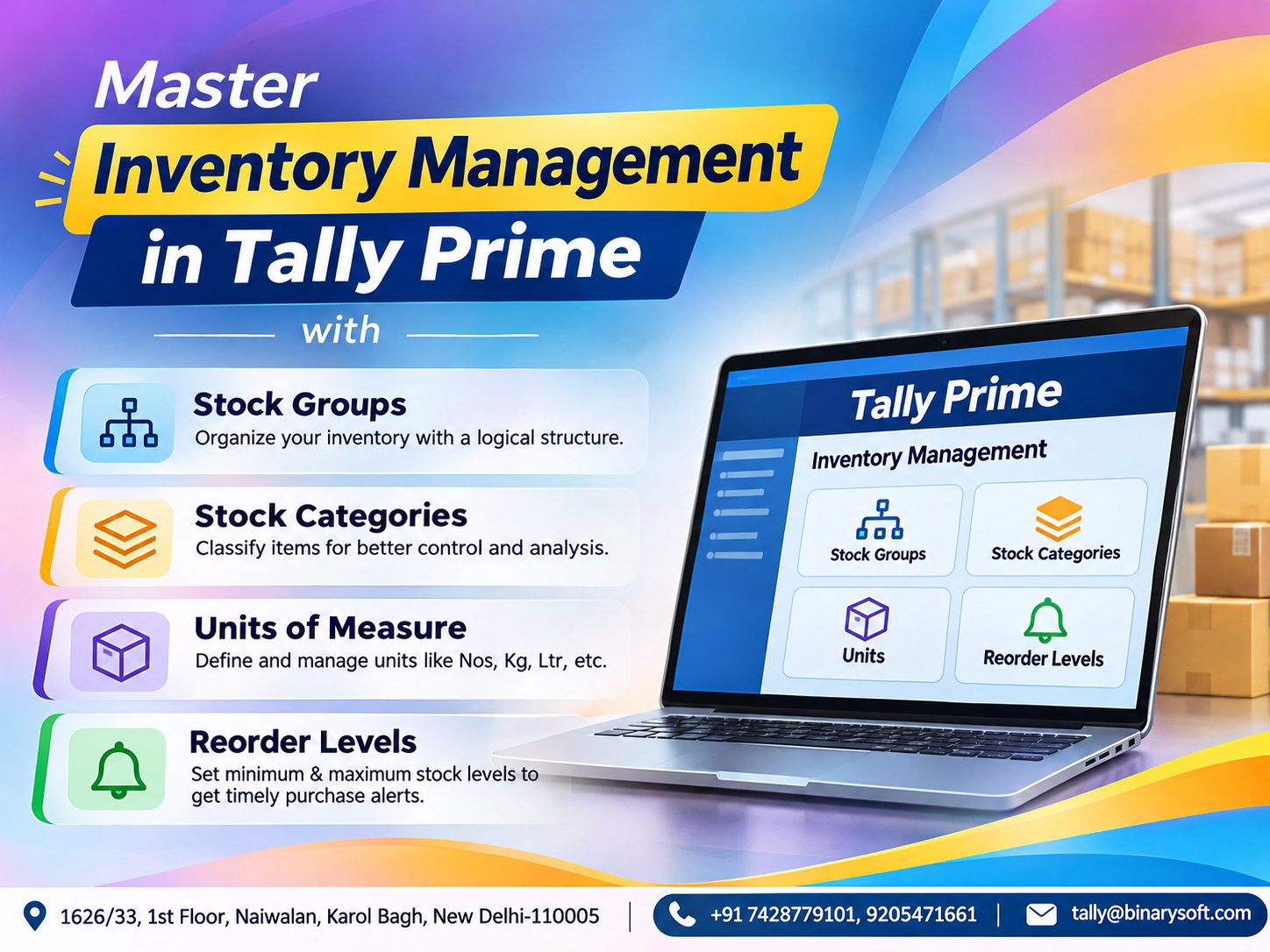
Create stock groups, stock categories where required, stock items and units of measurement.
Businesses managing multiple storage locations can configure godowns or locations.
Step 4: Enable Relevant Features
Configure inventory, bill-wise accounting, order processing, GST and other required features based on operational needs.
Step 5: Record Purchase Transactions
Use purchase orders and purchase vouchers where applicable.
Ensure supplier references, quantities, rates and tax details are correct.
Step 6: Record Sales Transactions
Create sales orders and invoices using appropriate customer ledgers and inventory details.
Step 7: Track Customer Payments
Record receipts against outstanding invoices and review receivables regularly.
Step 8: Review Business Reports
Monitor sales registers, purchase registers, outstanding statements, stock summaries and financial reports.
Step 9: Maintain Data Security
Use suitable user permissions, reliable backups and controlled access to financial information.
Step 10: Improve Processes Continuously
Review transaction accuracy, payment collection practices and inventory procedures regularly.
A successful implementation requires both appropriate software configuration and disciplined daily usage.
11. How Tally Prime Helps Businesses Improve Profitability
Profitability depends on controlling costs, maintaining sales performance and managing financial resources efficiently.
Tally Prime supports these objectives by improving access to reliable business information.
Better purchase decisions: Stock reports help businesses review inventory before making procurement commitments.
Improved sales visibility: Sales registers and customer accounts provide useful information about revenue activity.
Stronger payment discipline: Receivables reports support timely customer follow-ups.
Reduced administrative effort: Integrated accounting minimizes repeated manual posting.
Improved financial control: Profit and Loss statements, ledgers and expense reports help identify financial trends.
More informed decisions: Business owners can review financial information without waiting for manually prepared summaries.
These benefits become particularly valuable as transaction volumes increase.
12. Tally Prime on Cloud for Flexible Business Management
Modern businesses often operate across multiple offices, warehouses or cities.
Business owners may need to review financial information while travelling or working away from their offices.
Tally Prime can be used through appropriately configured cloud-hosted environments, enabling authorized users to access their accounting system remotely.
Potential Benefits of Tally Prime Cloud Hosting
Remote accessibility
Authorized users can work with the hosted accounting environment from supported devices and locations.
Centralized business information
Teams can access a common accounting environment, subject to configuration and permissions.
Business continuity
A properly designed hosting arrangement can support backup and recovery procedures.
Multi-user collaboration
Eligible Tally Prime licensing and suitable hosting infrastructure can support simultaneous authorized users.
Security controls
Access permissions, network protections, backups and monitoring can help protect business information.
Cloud hosting performance, security and availability depend on the hosting provider, infrastructure and implementation.
Businesses should evaluate their requirements before selecting a hosting solution.
13. Best Practices for Purchase, Sales and Payment Management
Businesses can achieve better results by following consistent operational practices.
Maintain accurate customer and supplier ledgers to avoid duplicate accounts and reporting confusion.
Record purchase and sales transactions promptly so that financial reports reflect current activity.
Review customer outstanding statements regularly and follow up on overdue invoices.
Compare inventory requirements with available stock before making significant purchase decisions.
Reconcile bank transactions periodically and investigate differences.
Apply appropriate user permissions to reduce unauthorized changes.
Maintain secure backups and test restoration procedures.
Review financial statements frequently to identify unusual expenses, declining margins or cash flow pressure.
Most importantly, train employees to follow consistent accounting procedures.
Even powerful accounting software cannot produce reliable reports when source transactions are incomplete or incorrect.
14. The Future of Efficient Business Accounting
Businesses increasingly expect accounting systems to provide faster information, stronger operational control and reduced manual effort.
Integrated purchase management, sales tracking, inventory accounting and payment monitoring are becoming essential capabilities.
For Indian businesses, the ability to maintain organized financial records while supporting applicable GST requirements is particularly valuable.
Tally Prime provides a foundation for connecting everyday accounting activities and improving financial visibility.
As businesses grow, they can further strengthen their processes through appropriate reporting practices, controlled remote access and periodic financial reviews.
The most important transformation is moving from reactive bookkeeping to informed business management.
Instead of discovering problems after month-end, business owners can use current accounting information to identify issues earlier and make better decisions.
Conclusion
Efficient business operations are essential for sustainable growth, profitability and financial stability.
Managing purchases, sales, customer payments and accounting through disconnected systems can create unnecessary complexity.
Tally Prime helps businesses bring these activities together through integrated transaction recording, inventory management, outstanding reports and financial statements.
With proper implementation, organizations can reduce repetitive work, improve accounting accuracy, strengthen payment monitoring and gain better control over daily operations.
Whether you manage a retail business, wholesale distribution company, manufacturing unit or service organization, adopting structured accounting processes can support long-term business success.
The real value of Tally Prime lies not only in recording transactions but also in helping businesses transform financial information into better operational decisions.
With professional guidance and appropriate configuration, businesses can build an accounting environment that supports their current requirements and future growth.
Powered by Binarysoft Technologies
Authorized Tally Partner
Binarysoft Technologies helps businesses implement and manage Tally Prime solutions for accounting, inventory management, GST-related processes and business operations.
Our services support businesses looking to improve accounting efficiency, organize financial records and explore suitable Tally Prime Cloud hosting options.
Location:
1626/33, 1st Floor, Naiwalan, Karol Bagh, New Delhi – 110005, INDIA
Contact Us:
+91 7428779101, 9205471661
Email:
tally@binarysoft.com
Business Hours:
10:00 AM – 6:00 PM, Monday to Friday
Simplify your purchases, strengthen sales tracking, manage customer payments and improve accounting efficiency with Tally Prime.
Frequently Asked Questions
What is Tally Prime used for in business operations?
Tally Prime is business management and accounting software used for financial accounting, inventory management, purchase transactions, sales invoicing, customer payments, GST-related accounting and financial reporting.
How does Tally Prime simplify purchase management?
Tally Prime helps businesses create purchase orders, record purchase invoices, maintain supplier ledgers, monitor outstanding payments and manage inventory-related purchase transactions.
Can Tally Prime track customer payments?
Yes. Businesses can maintain customer ledgers, record receipt vouchers, adjust payments against invoices and review outstanding receivables.
How does Tally Prime help with sales tracking?
Tally Prime provides sales registers, customer ledger reports and inventory-related reports that help businesses review sales transactions and product movement.
CA. Rishaan Lodha focuses on accounting controls, taxation, and financial reporting for trading and service organizations. He helps businesses improve transaction recording, reconciliations, and documentation for efficient financial management.