Call CA Tally HelpDesk
+91 9205471661,
7428779101
Introduction: Why Growing Businesses Need ERP Software
Every successful business reaches a stage when managing daily operations becomes more complicated.
In the beginning, a business owner may handle accounting, sales, purchases and inventory using spreadsheets or basic software.
As the organization grows, transaction volumes increase, more employees join, and business activities become difficult to coordinate.
Sales teams need accurate inventory information.
Accountants require complete financial records.
Purchase departments must monitor supplier orders.
Business owners need reliable reports to make important decisions.
When information is maintained across disconnected systems, even simple activities can become time-consuming.
An invoice may be prepared correctly, but the inventory record may not be updated. A customer may have an overdue balance, but the sales team may remain unaware. Management may receive financial reports several days after requesting them.
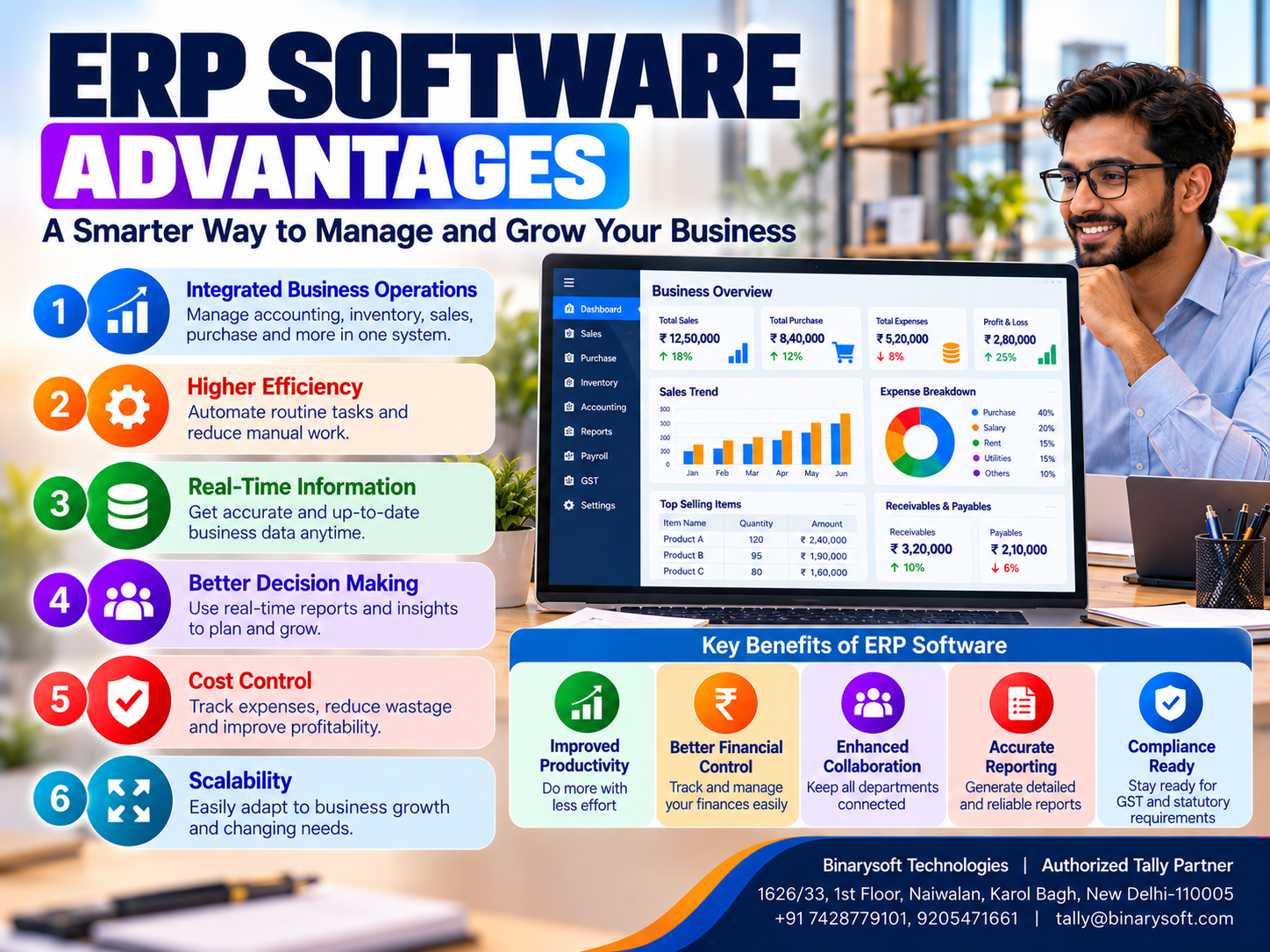
Enterprise Resource Planning (ERP) software helps businesses address these challenges by connecting important processes within a structured management environment.
ERP systems can support accounting, inventory, procurement, sales, financial reporting and other operational activities.
For Indian small and medium enterprises, adopting suitable business management software can improve efficiency, reduce repetitive work and support more informed decisions.
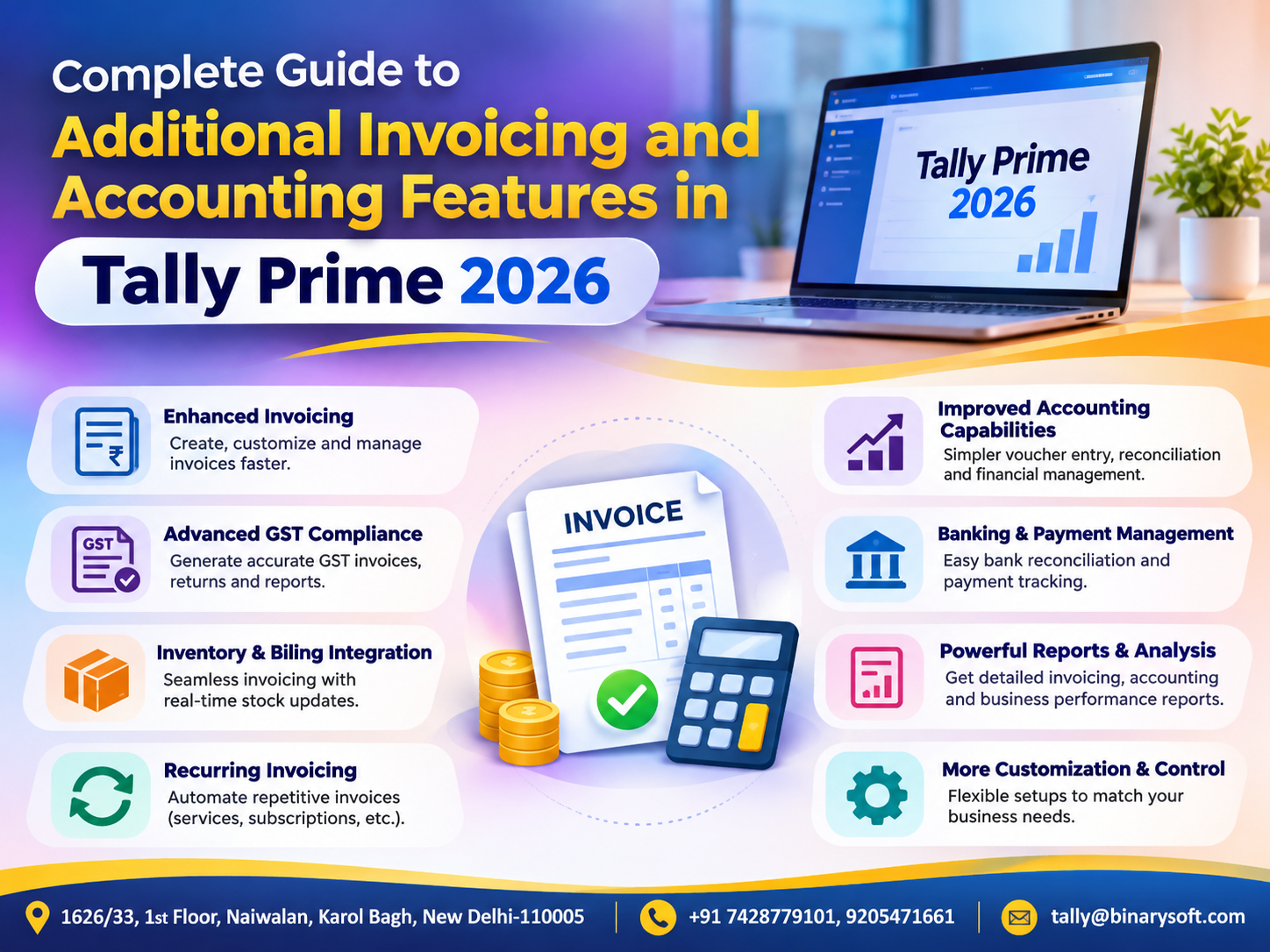
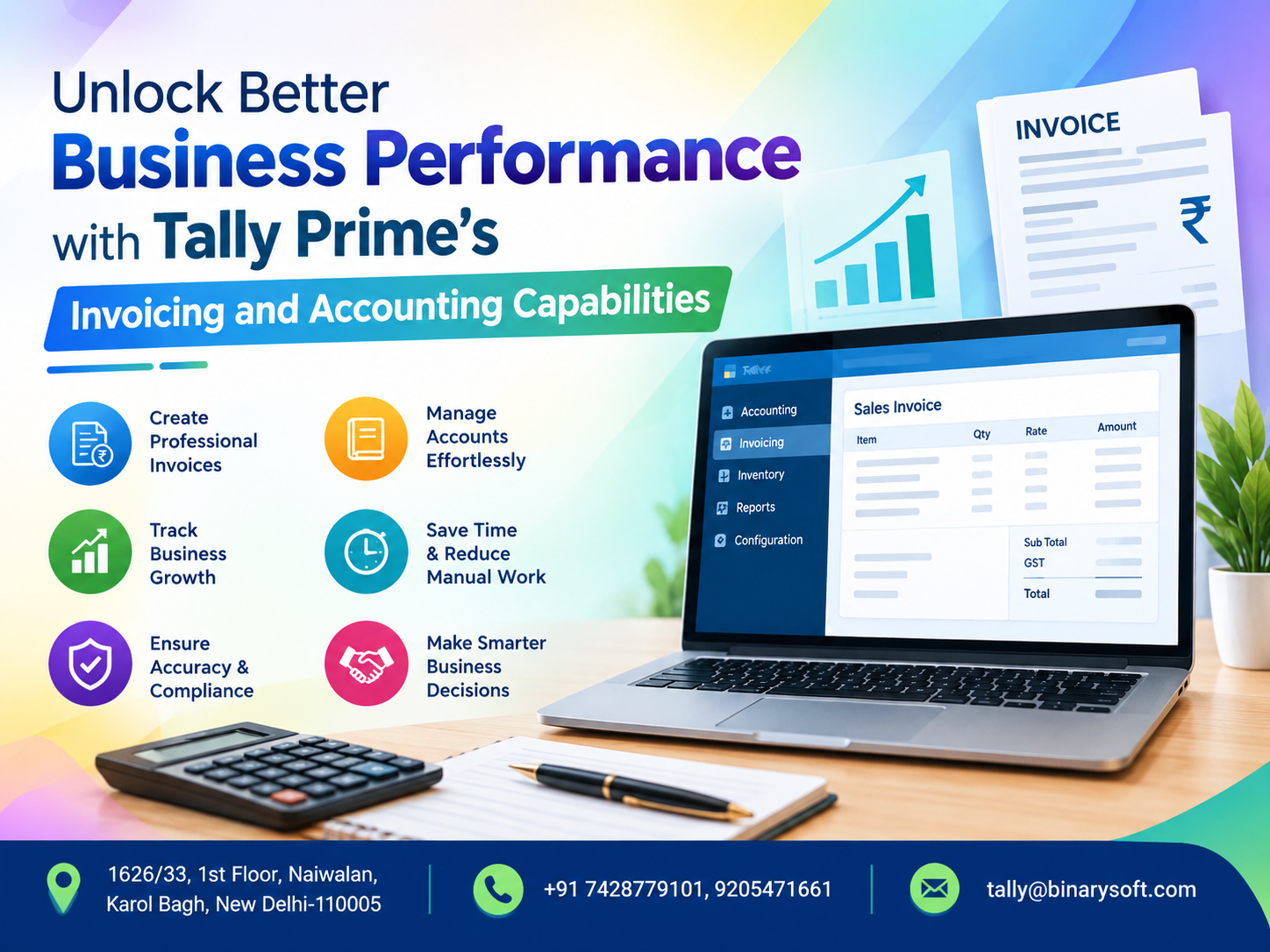
Tally Prime offers several accounting, inventory, invoicing, banking and reporting capabilities that can help businesses manage their operations.
This article explains the major advantages of ERP software, practical business applications, implementation considerations and how Tally Prime can support growing organizations.
A Business Owner's Story: When Success Started Feeling Like Failure
Amit operated an electrical accessories distribution business in Bhagirath Palace, Delhi.
His father had established the business with a small shop and a handful of regular customers.
Over the years, Amit expanded the company into a wholesale distribution operation supplying electrical products across Delhi NCR.
Business was growing.
Sales were increasing.
New customers were placing larger orders.
From the outside, everything appeared successful.
However, Amit was becoming increasingly stressed.
His accountant maintained financial records in one application.
The warehouse supervisor used spreadsheets to track inventory.
The sales team maintained customer outstanding details separately.
Purchase orders were communicated through messages and telephone calls.
Every evening, Amit spent hours trying to understand what had happened during the day.
One afternoon, an important customer requested an urgent delivery.
The sales employee confirmed the order after checking the inventory spreadsheet.
However, the warehouse supervisor later discovered that the available quantity was incorrect.
The company had already dispatched part of the stock to another customer.
The order could not be completed.
The disappointed customer began purchasing from a competitor.
That evening, Amit sat alone in his office.
He remembered how hard his father had worked to build customer relationships.
He worried that poor internal coordination was damaging years of effort.
Amit realized that increasing sales was not enough.
The business needed more reliable processes.
He decided to improve accounting, inventory and customer management through a structured software implementation.
Employees received practical training.
Stock records were standardized.
Outstanding payments were reviewed regularly.
Management began using financial reports more consistently.
The transition required patience, but Amit gradually gained better visibility into daily operations.
He understood that technology was not replacing his business experience.
It was helping him use that experience more effectively.
A growing business needs more than increasing sales. It needs reliable information, coordinated employees and financial control.
This is an illustrative story based on common business challenges.
What Is ERP Software?
Enterprise Resource Planning software is a business management system designed to integrate important organizational activities.
Depending on the application, ERP software may support accounting, inventory management, sales, procurement, manufacturing, human resources and financial reporting.
The purpose of ERP is to reduce information gaps between departments and provide more consistent business records.
For example, an integrated sales transaction may update accounting balances and relevant inventory information.
This reduces the need to maintain duplicate records across separate systems.
However, ERP capabilities differ significantly between products.
Businesses should evaluate software according to their operational requirements rather than assuming every ERP system includes every business function.
Why ERP Software Is Important for Modern Businesses
Businesses operate in an environment where accurate information and timely decisions are increasingly important.
Customers expect reliable deliveries.
Suppliers require payment visibility.
Management needs to monitor costs.
Regulatory requirements demand proper recordkeeping.
When business information is fragmented, employees spend more time reconciling records and correcting errors.
ERP software can help establish structured processes and improve coordination.
For SMEs, these improvements may be particularly valuable because limited resources must be used efficiently.
15 Major Advantages of ERP Software
1. Centralized Business Information
One of the biggest advantages of ERP software is the ability to maintain important business information within a structured system.
Without integrated software, organizations may use separate applications for accounting, inventory and purchasing.
This can create inconsistent records.
ERP software helps reduce duplication by allowing relevant business processes to use shared information.
Example
A wholesale distributor records a sales invoice.
In a suitably configured integrated system, the transaction can affect accounting and inventory records.
Management can review the information without waiting for separate manual updates.
Business Benefits
Centralized information can improve consistency, reduce reconciliation effort and support faster decision-making.
However, integration depends on the selected software and configuration.
2. Improved Accounting Accuracy
Accurate accounting is essential for financial stability.
Manual processes can lead to duplicate entries, incorrect ledger classifications and missing transactions.
ERP software helps organizations establish consistent accounting procedures.
How Tally Prime Helps
Tally Prime supports sales, purchases, receipts, payments, journal entries and other relevant accounting transactions.
Businesses can maintain structured ledgers and generate financial reports.
Practical Benefits
Accounting teams can reduce dependence on disconnected spreadsheets.
Management can review recorded financial information more efficiently.
However, software cannot automatically prevent every accounting error.
Employee training and regular verification remain important.
3. Better Inventory Management
Inventory management is a major challenge for retailers, wholesalers, distributors and manufacturers.
Excess stock increases holding costs.
Insufficient stock can result in missed sales.
Inaccurate records create purchasing and delivery problems.
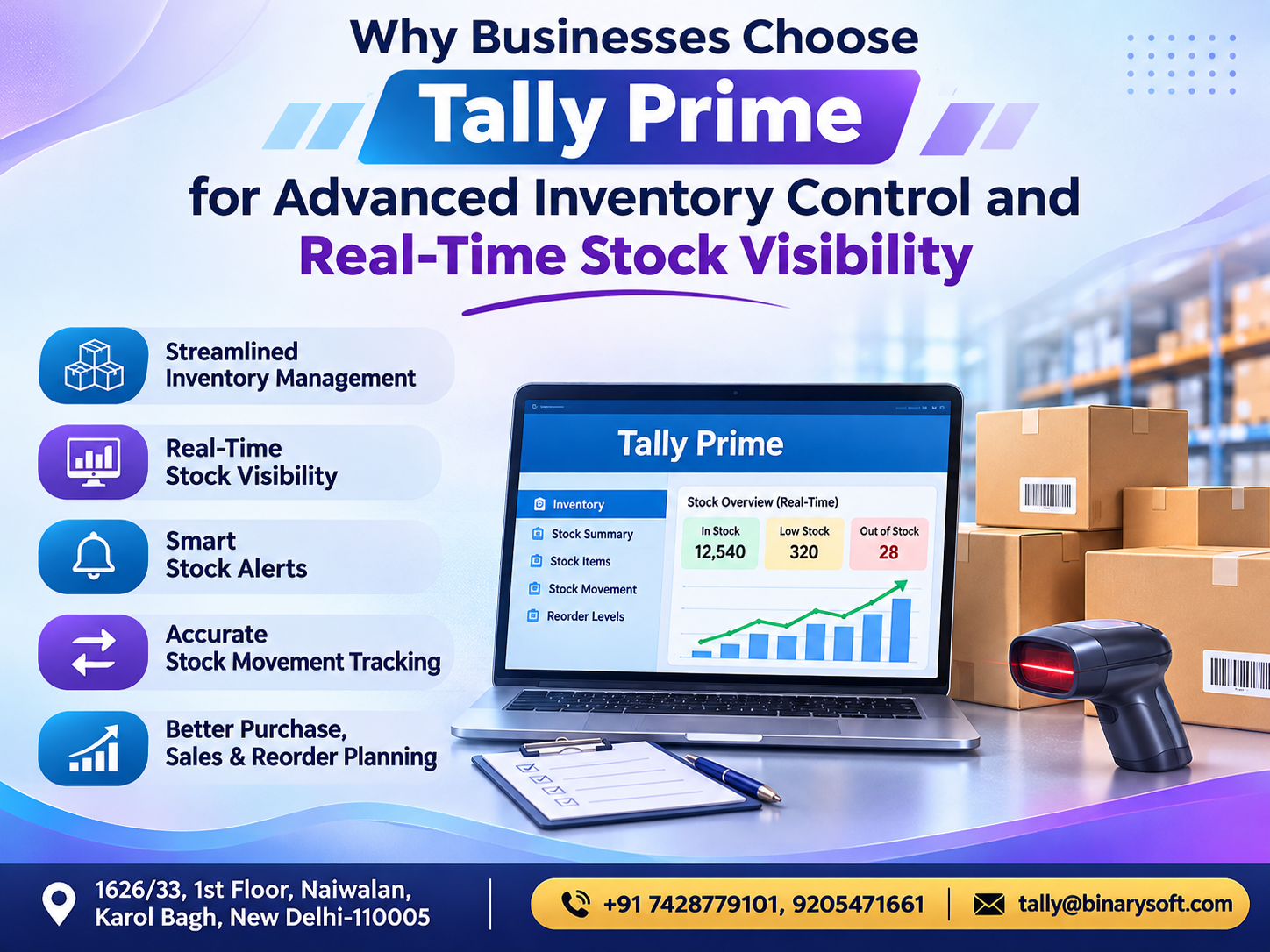
ERP software can improve stock visibility through structured inventory records.
Tally Prime Features
Tally Prime supports stock items, stock groups, units of measurement, godowns and relevant inventory reports.
Applicable businesses can also use batch-related inventory features.
Business Benefits
Better inventory information can support purchasing decisions, stock verification and order fulfillment.
For example, a distributor can review recorded stock quantities before accepting large customer orders.
4. Increased Employee Productivity
Employees often spend considerable time performing repetitive administrative tasks.
These may include preparing reports, checking balances and transferring information between spreadsheets.
ERP software can reduce some of this repetitive work.
Example
An accountant may previously prepare a monthly sales summary by manually combining several spreadsheets.
With suitable accounting software, relevant reports can be generated from recorded transactions.
Business Benefits
Employees may spend less time preparing routine information and more time reviewing exceptions or supporting customers.
Productivity improvements depend on employee training, process design and software adoption.
5. Faster Financial Reporting
Business owners need timely financial information.
Delayed reports can make it difficult to respond to financial problems.
ERP software helps organizations generate reports using recorded transactions.
Important Financial Reports
Profit and loss statements show income and expenses.
Balance sheets present the financial position of the business.
Cash flow-related reports support financial analysis.
Sales and purchase reports help management review commercial activity.
Tally Prime Application
Tally Prime provides financial and operational reporting capabilities.
Applicable releases also offer dashboard functionality for selected business information.
Business Benefits
Management can review performance more frequently and identify issues requiring attention.
6. Improved Cash Flow Management
Cash flow is essential for business continuity.
A company may report strong sales while struggling to collect customer payments.
ERP software can support receivables and payables management.
Tally Prime Features
Bill-wise accounting helps maintain invoice-related outstanding information.
Customer outstanding reports support payment follow-up.
Supplier outstanding reports help businesses review obligations.
Cash and bank reports provide additional financial visibility.
Practical Example
A distributor offers customers 30-day credit terms.
Regular outstanding reviews help the accounts team identify overdue invoices.
Management can use this information to prioritize collection activities.
Business Benefits
Better payment visibility can support working capital management.
However, software alone cannot guarantee faster customer payments.
7. Better Business Decision-Making
Business decisions should be supported by reliable information.
Without accurate records, management may rely heavily on assumptions.
ERP software provides structured data that can support financial and operational analysis.
Example
A retailer wants to identify slow-moving products.
Inventory and sales reports can help management investigate purchasing patterns.
A manufacturer may review expense reports to identify increasing operating costs.
Business Benefits
Better information can support decisions involving pricing, inventory, purchasing and business expansion.
The quality of decisions still depends on management judgment and accurate data.
8. Improved Customer Service
Customer satisfaction depends on reliable order fulfillment, accurate invoices and timely communication.
Disconnected business systems can create delays.
ERP software may improve coordination between sales, inventory and accounting teams.
Example
A customer requests information about an outstanding invoice.
The accounts team can review recorded balances instead of searching through multiple spreadsheets.
Business Benefits
More consistent information can help employees respond to customer questions efficiently.
Businesses requiring advanced customer relationship management may need specialized CRM software or integrations.
9. Better Purchase and Supplier Management
Purchasing activities influence inventory availability and operating costs.
Businesses must monitor supplier orders, invoices and payments.
ERP software can support structured procurement records.
Tally Prime Application
Tally Prime provides purchase accounting, supplier ledgers and purchase order-related capabilities.
Businesses can review supplier outstanding balances and recorded purchase transactions.
Business Benefits
Structured purchasing records can improve coordination and support supplier payment planning.
Advanced procurement approval workflows may require additional tools or configuration.
10. Improved Tax-Related Recordkeeping
Indian businesses must maintain appropriate accounting and tax records.
GST-related transactions, applicable TDS requirements and financial documentation require careful attention.
ERP software can support consistent transaction recording.
Tally Prime Features
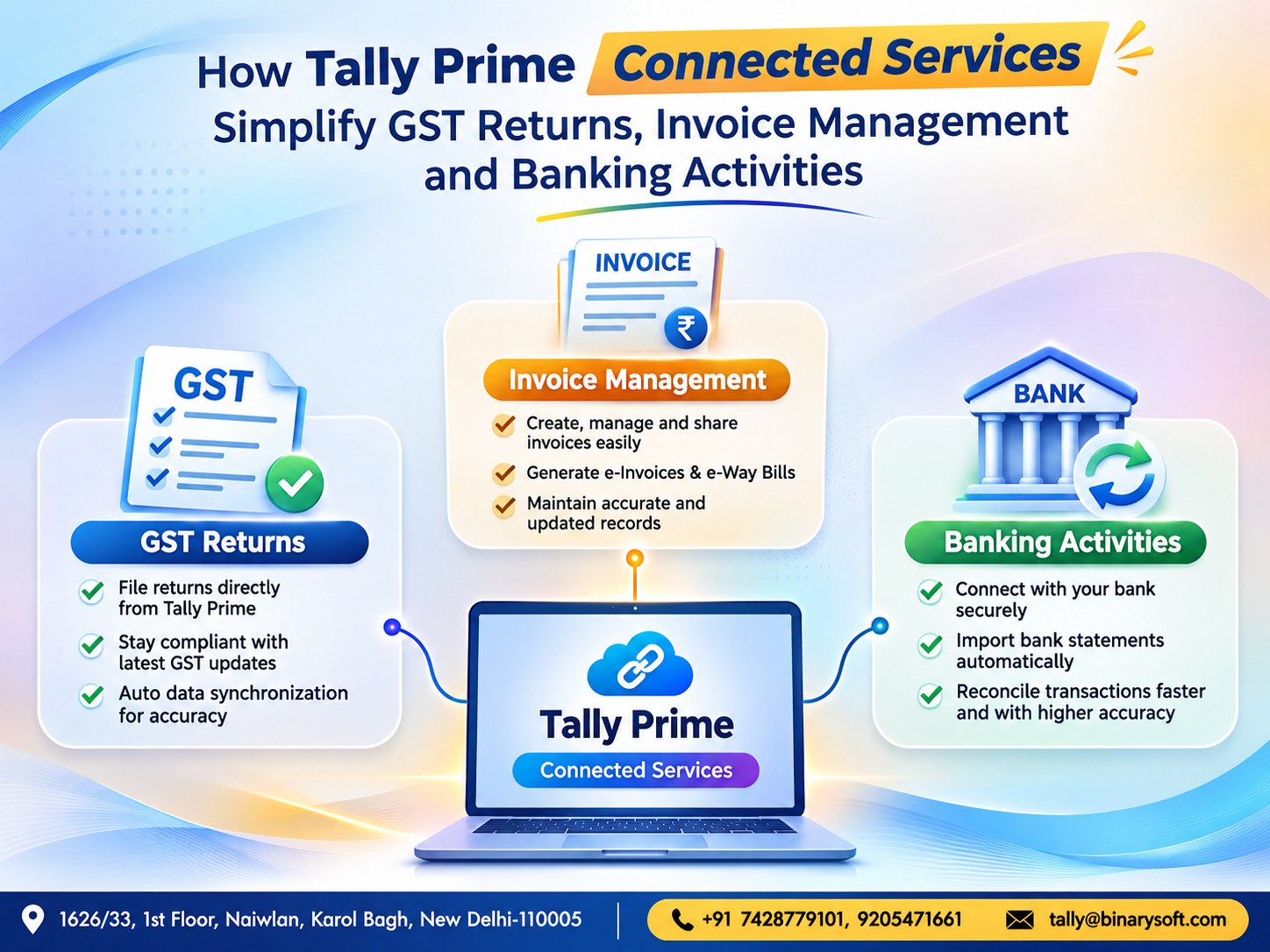
Tally Prime provides GST-related invoicing and accounting capabilities.
It also supports relevant TDS functionality.
Eligible businesses can use supported e-invoicing and e-way bill capabilities according to applicable requirements.
Important Consideration
Tax compliance depends on correct configuration, accurate transactions and current legal requirements.
Businesses should verify specialized tax matters with qualified professionals.
Software assistance does not replace statutory responsibility.
11. Better Cost Control and Profitability Analysis
Business profitability depends on controlling expenses as well as generating revenue.
ERP software can help organizations classify and review costs.
Tally Prime Application
Expense ledgers support structured accounting.
Cost centres can help allocate relevant transactions to departments or projects.
Budgeting features support selected financial planning requirements.
Example
A company operates three departments.
Management wants to review expenses separately.
Appropriate cost centre configuration can support departmental financial analysis.
Business Benefits
Detailed expense information helps identify areas requiring investigation.
12. Improved Data Security and Accountability
Financial and operational records contain sensitive information.
Businesses need appropriate security procedures.
ERP software may provide user access controls and other protective features.
Tally Prime Security
Tally Prime supports relevant user security configurations.
TallyVault provides encryption-related protection.
Applicable product editions and configurations offer Edit Log capabilities.
Business Benefits
Security features can help restrict access and support accountability.
However, organizations also need secure infrastructure, backups and employee awareness.
13. Support for Multi-Location Operations
Growing businesses may operate multiple branches, warehouses or offices.
Managing information across locations can become difficult.
ERP software can support selected multi-location requirements.
Tally Prime Application
Godown management supports location-wise inventory records.
Cost centres can help allocate selected financial transactions.
Multiple company datasets and relevant group reporting capabilities support certain organizational structures.
Important Limitation
Different legal entities and GST registrations may require separate accounting configurations.
Multi-location inventory management does not automatically provide complete enterprise consolidation.
Businesses should evaluate their requirements carefully.
14. Greater Business Scalability
Business requirements change as organizations expand.
A small retailer may become a wholesale distributor.
A manufacturer may introduce additional product lines.
A service company may open new offices.
Suitable ERP software can support growth by maintaining structured records and configurable processes.
Business Benefits
Organizations may be able to expand operations without relying entirely on additional manual administration.
However, scalability depends on the selected product, licensing, infrastructure and operational complexity.
15. Better Long-Term Operational Efficiency
ERP software can help businesses establish consistent workflows.
Over time, standardized procedures may reduce avoidable errors and improve coordination.
Examples
Accounting teams follow consistent transaction procedures.
Inventory employees maintain structured stock records.
Management reviews reports regularly.
Purchase departments monitor supplier information.
Business Benefits
Reliable processes can improve operational stability.
However, these benefits require continuous training, monitoring and improvement.
How Tally Prime Supports Important ERP Advantages
Tally Prime provides a practical business management environment for many Indian SMEs.
Its features can support several of the advantages discussed above.
Accounting Management
Businesses can maintain ledgers, vouchers and financial statements.
GST Billing
Applicable GST-related invoicing and accounting features support transaction recording.
Inventory Management
Stock items, godowns and inventory reports help businesses monitor recorded stock.
Banking
Relevant banking and reconciliation features support financial recordkeeping.
Outstanding Management
Bill-wise accounting and outstanding reports help businesses review customer and supplier balances.
Financial Reporting
Profit and loss statements, balance sheets and other reports support management analysis.
Cost Centres
Businesses can allocate selected expenses to departments or projects.
Manufacturing-Related Inventory
Bills of Materials and relevant inventory vouchers support selected manufacturing workflows.
Payroll
Applicable payroll features support employee-related salary records.
Security
User access controls and relevant security features help protect business information.
Important Consideration
Tally Prime is not a complete substitute for every specialized ERP application.
Advanced CRM, production scheduling, enterprise human resource management and complex supply chain planning may require additional software.
Businesses should evaluate requirements before implementation.
Case Study 1: ERP Benefits for an Electronics Distributor in Nehru Place
Business Type: Electronics wholesale distribution
Location: Nehru Place, New Delhi
Primary Challenges: Inventory discrepancies, delayed collections and fragmented accounting records.
Business Background
Consider an electronics distributor supplying computer accessories and networking products to retailers.
The company maintains inventory in spreadsheets while accounting transactions are recorded separately.
Management frequently struggles to verify available stock and customer balances.
Implementation Strategy
The organization introduces structured accounting and inventory procedures using Tally Prime.
Stock items and groups are configured.
Relevant godowns are established.
Customer outstanding balances are reviewed regularly.
Employees receive practical training.
Illustrative Outcomes
Inventory records become more consistent.
Accounts teams spend less time reconciling separate records.
Management gains better visibility into customer balances.
Order processing becomes more organized.
Key Learning
Integrated accounting and inventory processes can help distributors improve operational coordination.
This is an illustrative case study, not a verified customer implementation.
Case Study 2: ERP Advantages for a Manufacturing SME in Faridabad
Business Type: Industrial components manufacturing
Location: Faridabad, Haryana
Primary Challenges: Material tracking, expense analysis and delayed financial reporting.
Business Background
Consider a manufacturing company producing industrial components for domestic customers.
The business maintains separate material registers and accounting records.
Management finds it difficult to review inventory movements and operating expenses consistently.
Implementation Strategy
The company introduces structured accounting and inventory procedures.
Tally Prime is configured for relevant business requirements.
Stock items and applicable manufacturing-related records are established.
Cost centres are used where appropriate.
Employees receive training in transaction recording and reporting.
Illustrative Outcomes
Material information becomes easier to review.
Accounting records become more consistent.
Management can investigate expenses more systematically.
Financial reporting requires less manual consolidation.
Key Learning
ERP-related benefits depend on accurate data, employee adoption and appropriate process design.
This is an illustrative case study, not a verified customer implementation.
Advantages of ERP Software for Different Industries
Retail Businesses
ERP software can support billing, inventory management, accounting and customer outstanding records.
Wholesale Distributors
Wholesalers may benefit from stock tracking, purchase accounting and credit management.
Manufacturing Companies
Manufacturers can use relevant inventory, costing and financial reporting capabilities.
Service Providers
Service businesses may focus on invoicing, expense tracking and profitability analysis.
Construction Companies
Construction businesses can use accounting, inventory and cost centre features for selected project-related financial requirements.
Multi-Branch Organizations
Businesses operating multiple locations can evaluate location-wise inventory, reporting and accounting structures.
How to Calculate the ROI of ERP Software
Return on Investment helps businesses evaluate whether ERP implementation produces measurable financial benefits.
The basic formula is:
ERP ROI (%) = [(Total Financial Benefits − Total ERP Costs) ÷ Total ERP Costs] × 100
Example
Suppose a business spends ₹2,00,000 on ERP implementation and related expenses.
During the selected evaluation period, it identifies measurable financial benefits worth ₹3,00,000.
Net benefit:
₹3,00,000 − ₹2,00,000 = ₹1,00,000
ROI:
(₹1,00,000 ÷ ₹2,00,000) × 100
ERP ROI = 50%
This is an illustrative calculation.
Businesses should include relevant recurring expenses and avoid counting the same benefit more than once.
Productivity improvements should be converted into financial benefits only when supported by reasonable assumptions.
Common Challenges of ERP Implementation
Although ERP software offers important advantages, implementation can create difficulties.
Initial Investment
Businesses may need to spend money on licensing, implementation, infrastructure and training.
Employee Resistance
Some employees may feel uncomfortable changing established procedures.
Data Migration
Existing records may require cleaning and verification.
Configuration Complexity
Incorrect setup can affect accounting and operational information.
Training Requirements
Employees need practical instruction.
Integration Limitations
Specialized workflows may require additional applications.
Ongoing Support
Businesses need reliable technical assistance and maintenance procedures.
These challenges should be considered during implementation planning.
How to Maximize ERP Software Benefits
Step 1: Identify Business Problems
Determine which processes require improvement.
Step 2: Select Appropriate Software
Choose a solution that supports actual business requirements.
Step 3: Plan Implementation
Establish responsibilities, timelines and expected outcomes.
Step 4: Prepare Existing Data
Verify accounting balances and relevant inventory records.
Step 5: Configure Business Processes
Set up ledgers, inventory structures and other required information.
Step 6: Train Employees
Provide role-based practical instruction.
Step 7: Establish Security and Backups
Protect business information through appropriate procedures.
Step 8: Review Reports
Monitor financial and operational information regularly.
Step 9: Measure Improvements
Compare actual performance with implementation objectives.
Step 10: Continue Improving
Update procedures as business requirements change.
ERP Software vs Traditional Business Management
Traditional business management often depends on manual registers, spreadsheets and disconnected applications.
ERP software aims to improve coordination through structured processes.
| Business Area | Traditional Approach | ERP-Based Approach |
|---|
| Accounting |
Separate records and manual reconciliation |
Structured transaction recording |
| Inventory |
Manual stock registers |
Digital inventory records |
| Reporting |
Spreadsheet consolidation |
Reports based on recorded data |
| Outstanding payments |
Separate follow-up lists |
Bill-wise outstanding information |
| Purchasing |
Manual supplier tracking |
Structured purchase records |
| Financial control |
Periodic manual review |
More frequent report access |
| Multi-location operations |
Disconnected location records |
Supported location-wise structures |
The actual improvements depend on the software selected and the quality of implementation.
Future of ERP Software for Indian SMEs
Digital business management is becoming increasingly important for Indian enterprises.
Organizations are adopting connected accounting, digital invoicing and more structured inventory procedures.
Cloud infrastructure can support remote working arrangements.
Advanced analytics and AI-assisted applications may create additional opportunities for forecasting and operational analysis.
However, advanced technology is useful only when underlying business data is accurate.
For SMEs, the most important starting point is often reliable accounting, inventory control and financial reporting.
Businesses should adopt technology according to their operational needs and financial capacity.
Conclusion
ERP software provides several important advantages for businesses seeking greater operational efficiency and financial control.
Centralized information, structured accounting, inventory management, financial reporting, credit control and improved coordination can help organizations manage daily activities more effectively.
For Indian SMEs, these benefits can be particularly valuable because business owners must make careful use of limited resources.
Tally Prime offers accounting, inventory, invoicing, banking, reporting and other capabilities that can support many business management requirements.
However, successful implementation depends on proper configuration, employee training and consistent procedures.
Businesses should evaluate their needs, calculate total costs and measure actual improvements.
The objective should not be to adopt technology simply because competitors are doing so.
It should be to solve real operational problems and create sustainable value.
The greatest advantage of ERP software is not simply automation. It is helping business owners understand their operations, control resources and make decisions with greater confidence.
Powered by Binarysoft Technologies
Authorized Tally Partner
Location: 1626/33, 1st Floor, Naiwalan, Karol Bagh, New Delhi – 110005, INDIA
Contact: +91 7428779101, 9205471661
Email: tally@binarysoft.com
Business Hours: 10:00 AM – 6:00 PM, Monday to Friday
Frequently Asked Questions
What are the main advantages of ERP software?
Major advantages include centralized information, improved accounting, better inventory control, increased productivity and faster reporting.
How does ERP software improve business efficiency?
ERP software can reduce repetitive work, improve information consistency and support better coordination between business activities.
Is ERP software suitable for small businesses?
Yes. Small businesses can benefit from suitable ERP or business management software when it matches their operational requirements.
Can Tally Prime provide ERP-related benefits?
Yes. Tally Prime supports accounting, inventory, invoicing, reporting and other functions relevant to many Indian businesses
CA. Rishubh Talrejaa specializes in GST, business accounting, and compliance advisory for growing enterprises. With experience in handling real-time transactional data and audits, he writes practical insights on inventory control, taxation, and digital transformation for Indian businesses operating in competitive markets.