Call CA Tally HelpDesk
+91 9205471661,
7428779101
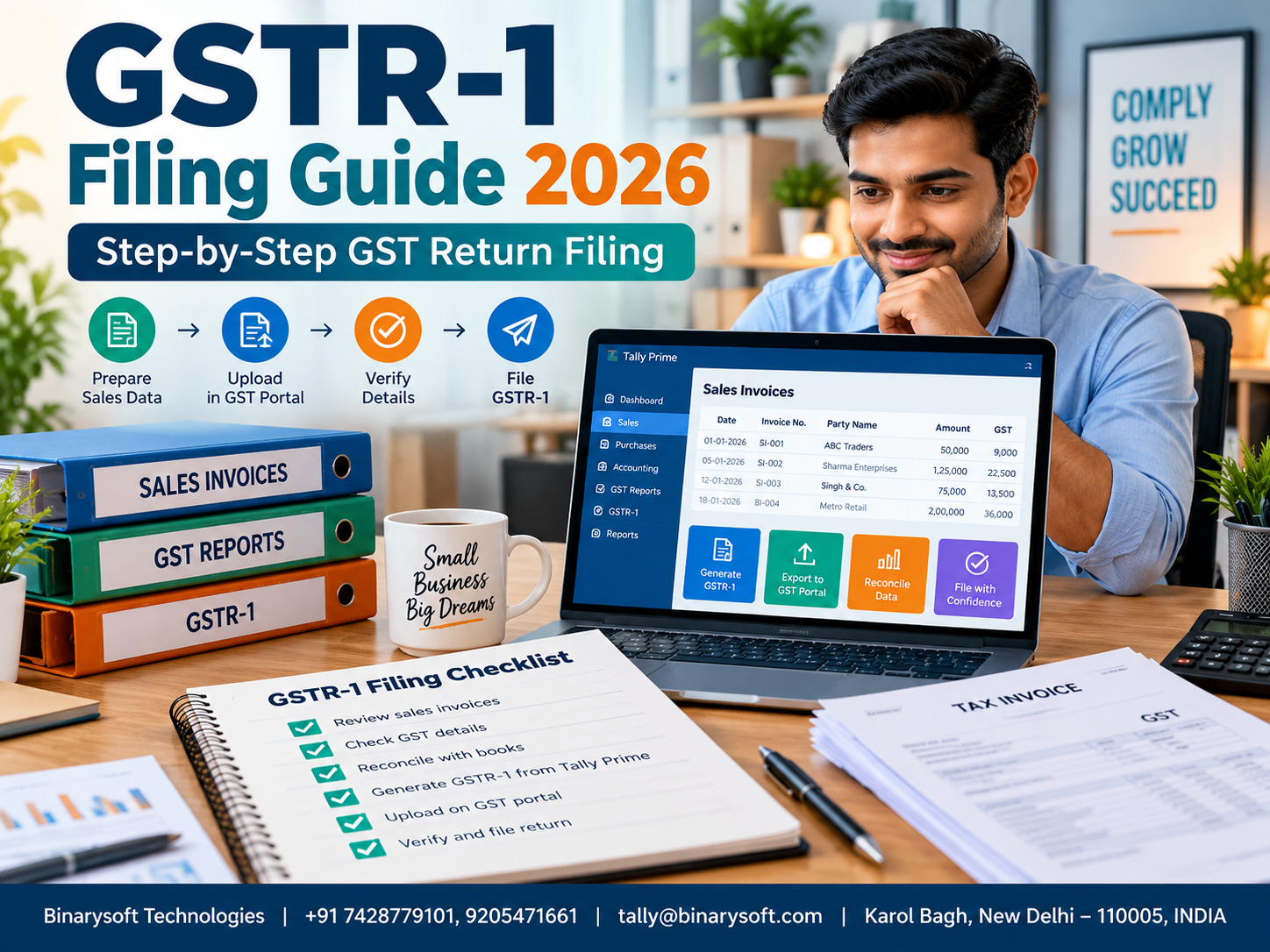
Introduction: Why Accurate GSTR-1 Filing Matters More Than Ever
For thousands of Indian businesses, GST return filing is more than a monthly compliance activity. It directly affects customer relationships, financial transparency, tax reporting and business credibility.
A single incorrect GSTIN, missing invoice or wrongly classified transaction can create reconciliation problems and delay a customer's input tax credit.
In 2026, businesses increasingly need structured accounting records, timely invoice reporting and reliable reconciliation processes to manage GST obligations efficiently.
GSTR-1 plays a central role in this process because it reports outward supplies, including taxable sales, credit notes, debit notes, exports and other applicable transactions.
Whether you operate a retail store, wholesale distribution business, manufacturing unit or service company, understanding GSTR-1 filing is essential.
Modern accounting software such as Tally Prime can help businesses maintain invoice records, identify inconsistencies, prepare GST reports and reduce repetitive data entry.
This guide explains the complete GSTR-1 filing process, important deadlines, common errors and practical methods to improve accuracy.
A Business Owner's Story: When One Missing Invoice Almost Cost a Valuable Customer
Rajesh operated a growing electrical goods distribution business in Delhi. His company supplied products to retailers and contractors across several states.
For years, his accountant maintained invoices using spreadsheets and manually prepared GST returns.
One afternoon, Rajesh received an unexpected call from a long-standing customer.
The customer was concerned because a purchase invoice worth ₹4.8 lakh was missing from the relevant GST records, affecting visibility of the expected input tax credit.
Rajesh immediately contacted his accountant.
After reviewing several files, they discovered that the invoice had been recorded in the sales register but accidentally excluded from the GSTR-1 filing data.
The customer was frustrated. Rajesh worried that the mistake might damage a relationship built over many years.
That evening, he decided to improve his accounting process.
His business adopted a more structured invoicing and GST reporting workflow using Tally Prime.
Instead of manually collecting sales information from different spreadsheets, the accounting team began maintaining centralized invoice records and reviewing GST reports before filing.
The change helped the team identify missing information earlier and reduced last-minute filing pressure.
More importantly, Rajesh regained confidence in the reliability of his financial records.
This is an illustrative story showing how a routine GST reporting mistake can affect business trust.
The lesson is simple: accurate GSTR-1 filing protects more than compliance. It helps protect customer confidence.
1. What Is GSTR-1 Under GST?
GSTR-1 is a statement of outward supplies filed by eligible GST-registered taxpayers.
It contains details of sales and other outward transactions during a particular tax period.
The information reported in GSTR-1 helps the GST system maintain transaction records and supports eligible recipients in verifying input tax credit information.
Businesses generally report the following:
-
Business-to-business (B2B) taxable invoices.
-
Business-to-consumer (B2C) outward supplies.
-
Credit notes and debit notes.
-
Export transactions and applicable SEZ supplies.
-
Nil-rated, exempted and non-GST supplies.
-
Applicable advances and their adjustments.
-
HSN/SAC-wise summaries.
-
Amendments to previously reported transactions.
-
Relevant e-commerce supplies.
GSTR-1 is primarily an information return. GST liability and eligible input tax credit are accounted for through the applicable payment and return processes, including GSTR-3B.
2. Who Is Required to File GSTR-1?
Most regular GST-registered taxpayers making outward supplies must file GSTR-1.
These include manufacturers, wholesalers, retailers, distributors, service providers and eligible e-commerce sellers.
Certain categories have different return requirements and generally do not file regular GSTR-1, including composition taxpayers, input service distributors and taxpayers registered only for specified TDS or TCS obligations.
A business must determine its return obligations according to its registration category.
Is GSTR-1 mandatory when there are no sales?
Yes. An eligible regular taxpayer must generally file a Nil GSTR-1 when there are no reportable outward supplies during the relevant period.
However, the taxpayer must satisfy the applicable conditions for Nil filing, including the absence of transactions or amendments requiring reporting.
3. GSTR-1 Due Dates for FY 2026–27
GSTR-1 filing frequency depends on the taxpayer's applicable filing arrangement.
|
Filing category
|
Normal due date
|
|---|
|
Monthly GSTR-1
|
11th of the following month
|
|
Quarterly GSTR-1 under QRMP
|
13th of the month following the quarter
|
|
Optional IFF under QRMP
|
13th of the following month for the first two months of a quarter
|
Eligible businesses with aggregate turnover up to ₹5 crore may opt for the Quarterly Return Monthly Payment scheme, subject to applicable conditions.
For example, the normal due date for October 2026 monthly GSTR-1 is 11 November 2026.
The normal due date for the October–December 2026 quarterly GSTR-1 is 13 January 2027.
These dates may change through government notifications. Businesses should verify any applicable extensions before filing.
4. Documents Required Before Filing GSTR-1
Preparing the correct information beforehand makes the filing process faster and more reliable.
Businesses should maintain complete sales invoices, customer GSTIN details, credit and debit notes, export documentation, applicable e-invoice records and relevant advance information.
The sales register should clearly identify invoice dates, invoice numbers, taxable amounts, GST rates and tax values.
HSN or SAC classifications should also be checked.
Businesses operating across multiple states must carefully verify place-of-supply details because these affect the applicable GST treatment.
A useful pre-filing practice is to reconcile accounting sales with GST reporting totals before accessing the GST portal.
5. How to File GSTR-1 Online: Complete Step-by-Step Process
The GST portal provides online preparation and offline upload facilities for GSTR-1.
Step 1: Log in to the GST portal
Open the official GST portal and log in using valid credentials.
Navigate to:
Services → Returns → Returns Dashboard
Select the appropriate financial year, quarter and return filing period.
Click Search to display the available returns.
Step 2: Select GSTR-1
Locate the GSTR-1 return tile.
Choose Prepare Online to enter information directly on the portal.
Alternatively, select the offline preparation option when using a compatible JSON file prepared through an offline utility or accounting software.
Step 3: Enter B2B invoice details
Report applicable sales made to GST-registered customers.
Provide the recipient GSTIN, invoice number, invoice date, invoice value, place of supply, taxable value and applicable tax details.
Ensure that the customer GSTIN and invoice particulars match the accounting records.
Incorrect recipient information may cause validation errors or create difficulties for the customer.
Step 4: Report B2C transactions
B2C transactions involve supplies to unregistered customers.
These transactions are reported according to the applicable invoice-level and summary reporting rules.
Certain inter-state B2C invoices require individual reporting when they exceed the prescribed threshold.
For return periods in 2026, businesses should apply the current ₹1 lakh threshold for relevant inter-state B2C large-invoice reporting rather than relying on older ₹2.5 lakh guidance.
Other applicable B2C transactions are generally reported through the appropriate summary sections.
Step 5: Enter credit notes and debit notes
Credit notes and debit notes must be reported when applicable.
For example, if a customer returns goods after receiving an invoice, the supplier may need to issue a credit note and report the adjustment.
Ensure that the document number, date, taxable value and tax adjustment are correct.
Step 6: Report exports and other special supplies
Businesses involved in exports or supplies to SEZ units must enter the relevant details in the prescribed sections.
The reporting treatment depends on the nature of the supply, supporting documentation and whether tax is paid or the supply is made under an applicable undertaking.
Step 7: Enter HSN/SAC summary
Provide the required HSN or SAC classification and summary information.
Depending on the applicable reporting requirements, the details may include quantity, unit, taxable value and GST amounts.
Correct classification improves reporting consistency and reduces avoidable errors.
Step 8: Verify amendments and additional details
Review amendments to previously reported invoices, relevant advances, exempt supplies and other applicable tables.
Check whether e-invoice details have been auto-populated and ensure that records are not duplicated.
Step 9: Generate the GSTR-1 summary
After entering or uploading the required information, generate the return summary.
Compare the portal figures with your accounting records.
Pay particular attention to taxable turnover, IGST, CGST, SGST, credit notes and invoice counts.
Step 10: File using DSC or EVC
After reviewing the consolidated summary, proceed to filing.
Select the authorized signatory and complete the filing using the available Digital Signature Certificate or Electronic Verification Code method.
After successful filing, the portal generates an acknowledgement reference number (ARN).
Save the acknowledgement and final return for future reference.
6. Understanding the Important GSTR-1 Tables
Different transaction categories are reported in different sections.
|
Table
|
Purpose
|
|---|
|
Table 4
|
B2B taxable outward supplies
|
|
Table 5
|
Applicable B2C large inter-state supplies
|
|
Table 6
|
Exports and other specified supplies
|
|
Table 7
|
B2C summary supplies
|
|
Table 8
|
Nil-rated, exempted and non-GST supplies
|
|
Table 9
|
Amendments and credit/debit notes
|
|
Table 11
|
Applicable advances and adjustments
|
|
Table 12
|
HSN/SAC-wise summary
|
|
Table 13
|
Documents issued
|
|
Table 14–15
|
Specified e-commerce transactions
|
Understanding these sections helps businesses classify transactions correctly and avoid reporting the same invoice twice.
7. How Tally Prime Helps in GSTR-1 Preparation and Filing
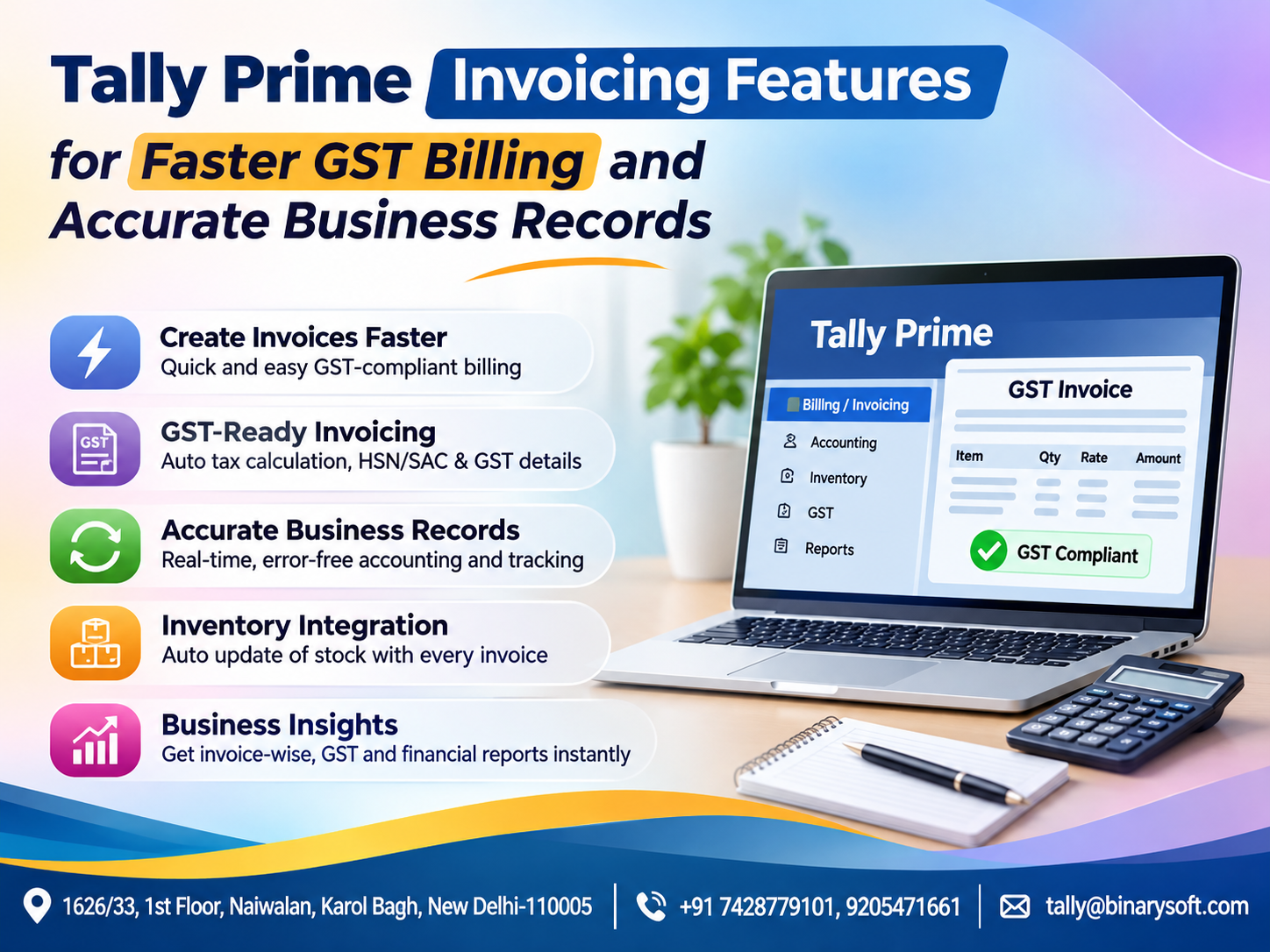
Tally Prime provides accounting and GST reporting features that help businesses organize transaction data before filing returns.
GST-compliant invoicing
Businesses can create sales invoices with customer details, GSTIN, tax classifications, invoice values and applicable GST calculations.
Maintaining this information at the time of invoicing reduces the need to reconstruct records during return preparation.
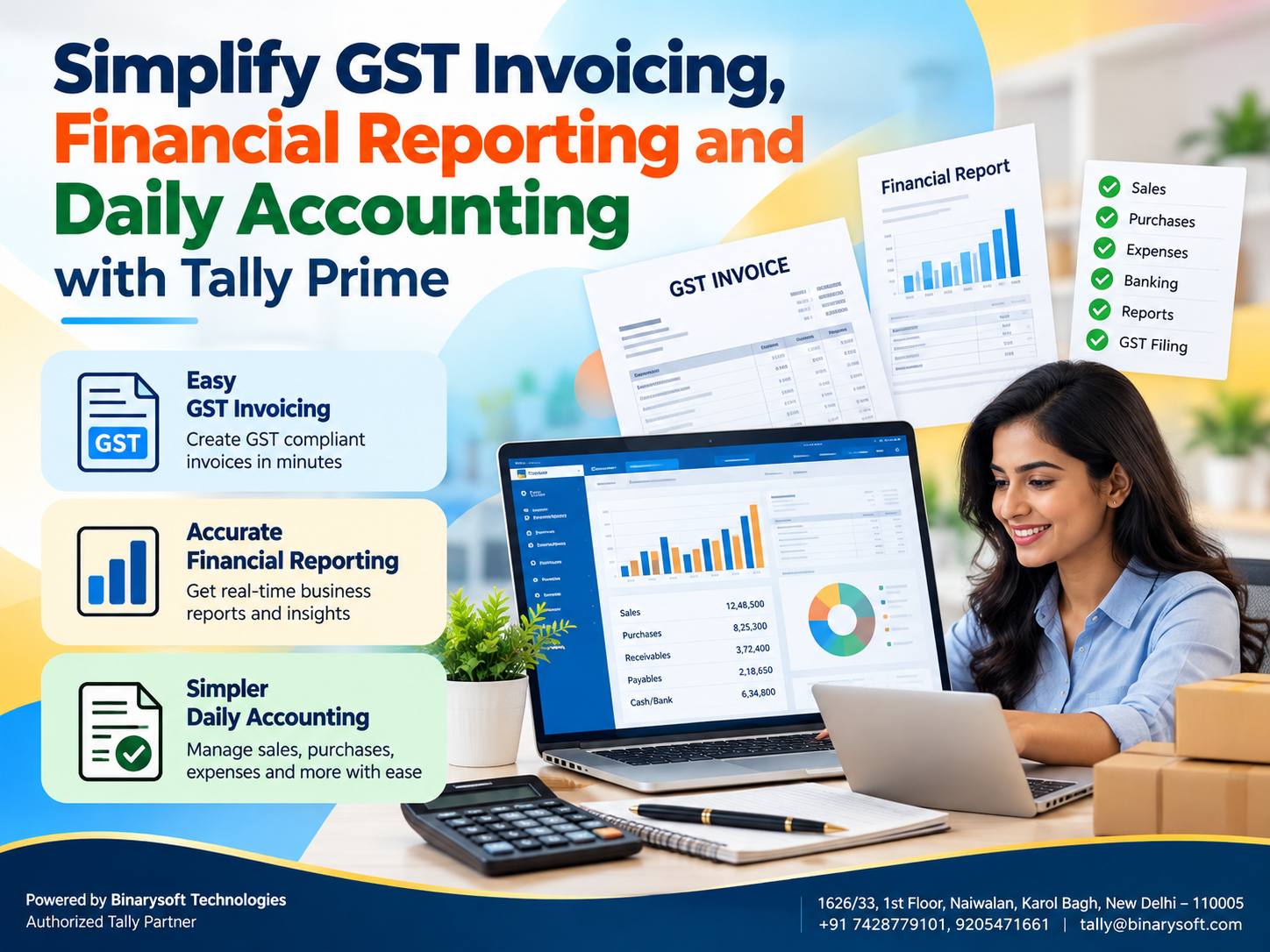
GST return reports
Tally Prime can organize recorded transactions into GST reports, including GSTR-1.
These reports help accountants review outward supplies and identify transactions requiring attention.
Error identification
Incomplete or inconsistent GST information can create reporting problems.
Relevant exception and verification reports help users identify issues such as missing tax details, incorrect classifications or incomplete transaction information.
Invoice reconciliation
Businesses can compare sales registers and return summaries to identify discrepancies before filing.
This is particularly useful when hundreds or thousands of invoices are generated every month.
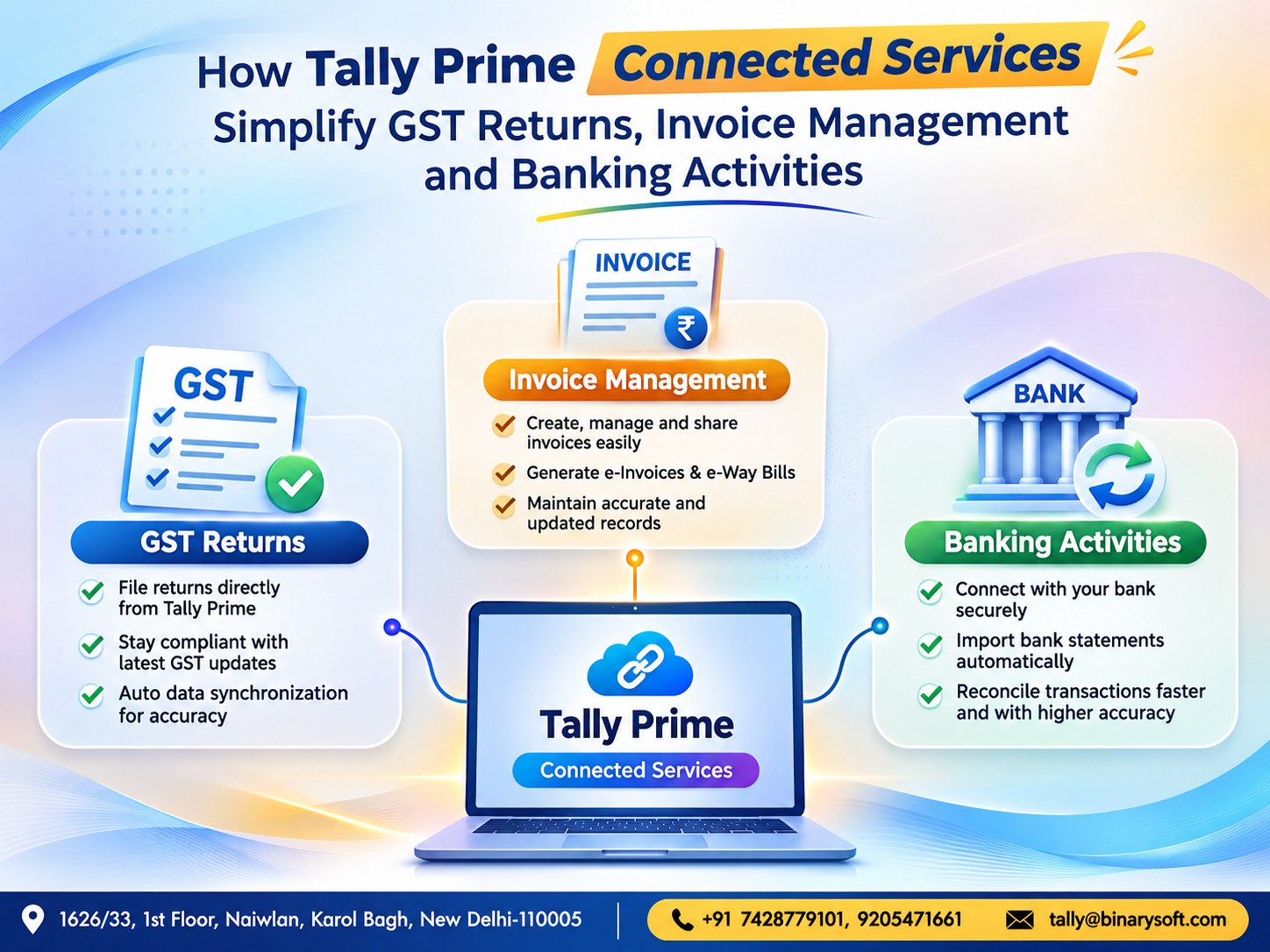
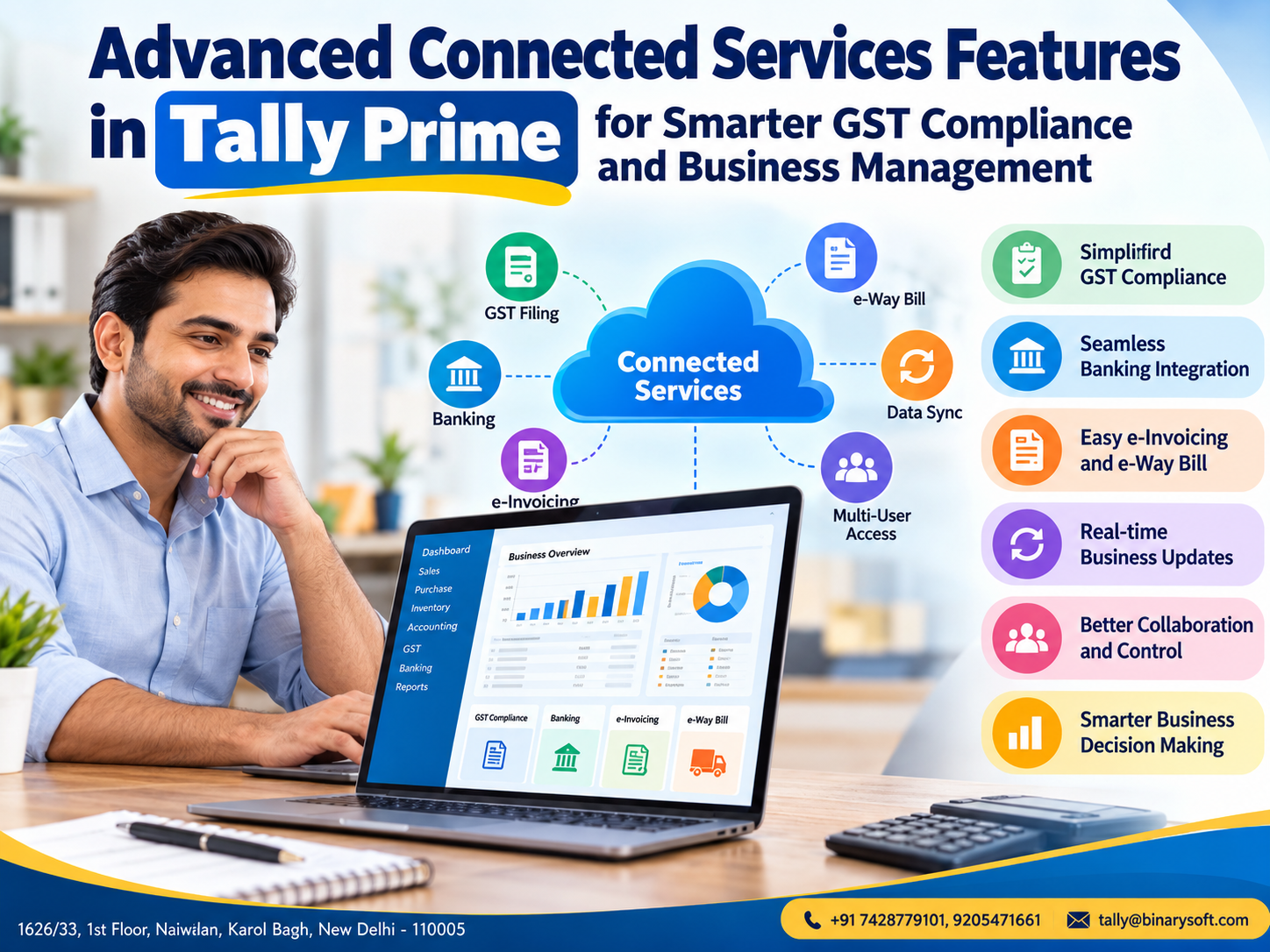
GST data export and connected filing
Depending on the installed release, configuration and available connected services, Tally Prime can support GST data export and connected return workflows.
Businesses should verify the filing functionality available in their version and confirm the final filing status on the GST portal.
Centralized business reporting
Alongside GST compliance, Tally Prime supports inventory management, outstanding receivables, ledger reporting and financial statements.
This helps businesses maintain a consistent accounting workflow rather than managing tax data separately.
8. Practical Example of GSTR-1 Calculation
Consider a Delhi-based wholesale trader with the following transactions during one month.
|
Transaction
|
Taxable value
|
GST
|
|---|
|
Local B2B sales at 18%
|
₹5,00,000
|
₹90,000
|
|
Interstate B2B sales at 18%
|
₹3,00,000
|
₹54,000
|
|
Local B2C sales at 12%
|
₹1,00,000
|
₹12,000
|
|
Credit note for local sales at 18%
|
−₹20,000
|
−₹3,600
|
|
Net total
|
₹8,80,000
|
₹1,51,400
|
The accountant must classify these transactions into the appropriate GSTR-1 sections.
Local supplies generally attract CGST and SGST, while interstate supplies generally attract IGST, subject to applicable rules.
In Tally Prime, properly configured sales ledgers and GST classifications help organize this information.
The accountant can review the GSTR-1 report and reconcile the totals before filing.
9. Case Study One: Wholesale Distributor Improves GST Reporting Accuracy
Illustrative business case study
A wholesale electrical distributor in Karol Bagh handled approximately 1,200 invoices every month.
The accounting team maintained separate spreadsheets for sales, credit notes and GST calculations.
During return preparation, employees frequently encountered invoice duplication, incomplete GSTIN details and mismatched taxable values.
The company introduced a structured accounting workflow using Tally Prime.
Sales invoices were entered with appropriate tax classifications, customer records were standardized, and GSTR-1 reports were reviewed before submission.
The business also established a monthly reconciliation checklist.
As a result, the team could identify reporting exceptions earlier, reduce repetitive manual work and prepare returns in a more organized manner.
The biggest improvement was better visibility into invoice-level information before the filing deadline.
10. Case Study Two: Service Company Simplifies Multi-Client GST Compliance
Illustrative business case study
A Delhi-based IT services company supplied consulting and technical support services to customers across India.
Its invoices involved different customer locations, billing arrangements and occasional credit adjustments.
Previously, the accounts department collected invoice details from several employees before preparing GST returns.
This created unnecessary delays and increased the risk of incomplete reporting.
After implementing a centralized Tally Prime workflow, the company maintained customer ledgers, recorded service invoices consistently and reviewed outward supply reports every month.
The accounting team could compare revenue records with GST summaries and identify missing details before submission.
The process helped management improve internal coordination and maintain more reliable compliance documentation.
11. Common GSTR-1 Filing Mistakes and How to Avoid Them
Businesses should pay particular attention to incorrect GSTIN entries, duplicate invoice reporting, wrong place-of-supply classification, missing credit notes and differences between accounting records and portal summaries.
Another frequent problem occurs when businesses fail to review auto-populated e-invoice information.
A practical prevention strategy is to complete invoice reconciliation before generating the final return summary.
Businesses should also review the relationship between GSTR-1 and GSTR-3B because incorrect outward supply reporting can affect subsequent tax liability information.
How to correct GSTR-1 errors
GSTR-1A provides an optional facility to correct eligible information for the same tax period after GSTR-1 filing or its due date, whichever is later, and before filing the corresponding GSTR-3B.
Certain older-period corrections may be made through applicable amendment tables, subject to statutory deadlines and restrictions.
Businesses should review corrections carefully rather than assuming that every filed return can be freely revised.
12. Best Practices for Accurate GSTR-1 Filing
A reliable GST filing process begins long before the statutory due date.
Businesses should record invoices promptly, validate customer GSTINs, review credit notes and regularly compare sales ledgers with GST reports.
A designated accountant should verify the final return summary before submission.
Management should also maintain secure backups of accounting data and preserve return acknowledgements.
Where multiple employees handle billing, inventory and accounting, clearly defined responsibilities help prevent omissions.
Using Tally Prime for organized transaction recording and reporting can support these practices, but human verification remains essential.
Conclusion
Accurate GSTR-1 filing is an important part of responsible business management.
It helps maintain transparent sales records, supports customer input tax credit processes and reduces avoidable GST reporting problems.
Businesses that rely entirely on manual spreadsheets may face challenges as invoice volumes increase.
A structured accounting workflow supported by Tally Prime can simplify invoice management, GST reporting, reconciliation and financial monitoring.
The objective should not simply be to file returns before the deadline. It should be to maintain accurate information throughout the accounting period.
With proper preparation, regular verification and reliable accounting processes, businesses can approach GST compliance with greater confidence.
Get Professional Tally Prime and GST Accounting Assistance
Powered by Binarysoft Technologies
Authorized Tally Partner
Location: 1626/33, 1st Floor, Naiwalan, Karol Bagh, New Delhi – 110005, INDIA
Contact Us: +91 7428779101, 9205471661
Email: tally@binarysoft.com
Business Hours: 10:00 AM – 6:00 PM, Monday to Friday
Frequently Asked Questions
What is GSTR-1?
GSTR-1 is a GST statement used by eligible registered taxpayers to report outward supplies, including sales invoices, credit notes, debit notes and other prescribed transactions.
What is the due date for filing GSTR-1?
The normal due date is the 11th of the following month for monthly filers and the 13th of the month following the quarter for quarterly filers, unless extended.
Can GSTR-1 be prepared using Tally Prime?
Yes. Tally Prime supports GST accounting and GSTR-1 report preparation. Available export and connected filing capabilities depend on the software release and configuration.
Is Nil GSTR-1 filing compulsory?
Generally, yes. Eligible taxpayers must file a Nil return when there are no reportable outward supplies or other relevant transactions for the period.
CA. Aaryan Kanodia focuses on GST reporting, bookkeeping systems, and financial process improvement. He works with businesses to simplify routine accounting activities and maintain records suitable for compliance and internal review.