Call CA Tally HelpDesk
+91 9205471661,
7428779101
Introduction: Why FIFO Matters in Inventory Management
Every business that purchases and sells physical products faces an important accounting question: how should inventory costs be assigned when purchase prices change?
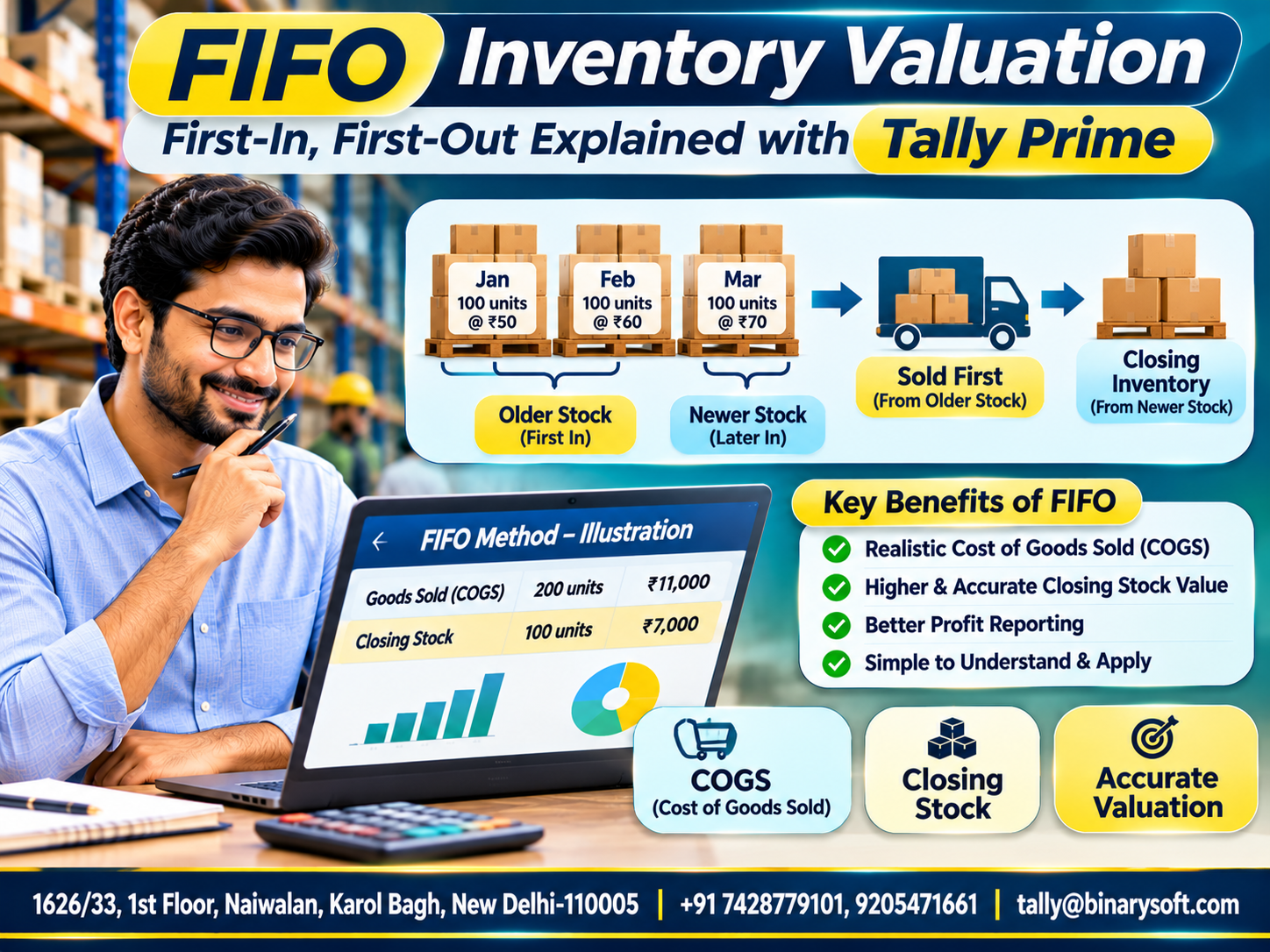
Consider a distributor purchasing the same product in January for ₹50, February for ₹60 and March for ₹70.
When customers purchase these products, which cost should the business assign to the goods sold?
The First-In, First-Out (FIFO) method provides a systematic answer.
FIFO assumes that the earliest inventory costs are assigned to goods sold or consumed before more recent inventory costs.
This approach helps businesses calculate the cost of goods sold, value closing inventory and prepare financial reports.
FIFO is widely used in retail, wholesale, distribution and manufacturing businesses.
It can also align with practical warehouse rotation, although accounting FIFO and physical stock movement are not necessarily identical.
For Indian businesses using Tally Prime, understanding FIFO helps ensure that inventory valuation settings support appropriate accounting policies.
1. What Is FIFO in Inventory Valuation?
FIFO stands for First-In, First-Out.
It is an inventory cost-flow assumption under which the oldest inventory costs are assigned first when calculating the cost of goods sold.
The remaining inventory is consequently valued using more recent purchase costs.
Suppose a retailer purchases identical products at different prices.
Under FIFO, the earliest available cost layer is used first when goods are sold.
If that layer is exhausted, the calculation moves to the next available layer.
FIFO is particularly useful when businesses maintain inventory purchased at varying prices.
However, FIFO costing does not automatically establish which physical product was actually dispatched.
Businesses must separately manage physical stock rotation and traceability.
2. How Does the FIFO Method Work?
FIFO operates through a sequence of inventory cost layers.
Each purchase creates a quantity associated with a particular cost.
When inventory is sold, the earliest available layer is assigned to the cost of goods sold.
For example:
| Purchase | Quantity | Unit Cost | Total |
|---|
| January |
100 units |
₹50 |
₹5,000 |
| February |
100 units |
₹60 |
₹6,000 |
| March |
100 units |
₹70 |
₹7,000 |
| Total |
300 units |
|
₹18,000 |
If the business sells 200 units, FIFO assigns:
100 units × ₹50 = ₹5,000.
100 units × ₹60 = ₹6,000.
Total Cost of Goods Sold = ₹11,000.
The remaining 100 units belong to the ₹70 cost layer.
Closing Inventory Value = ₹7,000.
The amounts reconcile to the original ₹18,000 inventory cost.
3. FIFO Formula for Inventory Valuation
FIFO does not rely on one average unit-cost formula.
Instead, it uses the sequence of available inventory cost layers.
The general calculation is:
FIFO Cost of Goods Sold = Sum of Units Sold from Each Oldest Available Cost Layer × That Layer's Unit Cost
Closing inventory is calculated from the costs of the remaining layers.
Another useful relationship is:
Closing Inventory = Opening Inventory + Purchases − Cost of Goods Sold
In this relationship, all amounts are expressed in monetary terms and assume appropriate inventory-cost adjustments.
Businesses must maintain accurate purchase quantities, dates and costs for dependable FIFO calculations.
4. Step-by-Step FIFO Calculation
A systematic FIFO calculation involves several stages.
Step 1: Identify Opening Inventory
Determine opening quantities and their applicable historical costs.
Step 2: Record Purchases
List purchases chronologically with quantities and unit costs.
Step 3: Determine Units Sold
Identify the total quantity issued or sold during the relevant period.
Step 4: Assign Oldest Costs First
Apply the earliest available inventory costs to the units sold.
Step 5: Move to the Next Layer
If the first layer is exhausted, continue with the next oldest layer.
Step 6: Calculate Cost of Goods Sold
Add the costs assigned to all units sold.
Step 7: Value Remaining Inventory
Use the unconsumed cost layers to calculate closing inventory.
Step 8: Reconcile Records
Verify that inventory quantities and values reconcile with relevant accounting information.
These steps support consistent FIFO valuation.
5. FIFO Example with Partial Inventory Layers
Suppose a business purchases:
150 units at ₹40 each.
200 units at ₹45 each.
100 units at ₹50 each.
Total inventory:
450 units costing ₹20,000.
Now suppose 280 units are sold.
Under FIFO:
First 150 units × ₹40 = ₹6,000.
Next 130 units × ₹45 = ₹5,850.
Total cost of goods sold:
₹11,850.
Remaining inventory:
70 units at ₹45 = ₹3,150.
100 units at ₹50 = ₹5,000.
Closing Inventory = ₹8,150.
The total reconciles:
₹11,850 + ₹8,150 = ₹20,000.
This example demonstrates how FIFO can use part of an inventory cost layer.
6. Why FIFO Inventory Valuation Is Important
FIFO affects several important financial measurements.
Cost of Goods Sold
It determines which historical purchase costs are assigned to inventory sold.
Closing Inventory
Remaining inventory generally reflects more recent acquisition costs.
Gross Profit
The assigned cost of goods sold influences reported gross profit.
Financial Statements
Inventory valuation affects the Balance Sheet and Profit & Loss statement.
Cost Analysis
Businesses can compare historical inventory costs with current purchasing conditions.
Accounting Consistency
A properly applied FIFO policy supports consistent inventory-cost calculations.
However, FIFO does not guarantee higher profitability or better business performance.
Its effect depends on purchase-price movements and actual operating conditions.
7. FIFO and Physical Stock Rotation
FIFO is commonly associated with issuing older stock before newer stock.
Physical stock rotation can be especially important for products that deteriorate or become obsolete.
Examples include packaged food, selected chemicals and certain consumer products.
However, businesses must distinguish physical stock rotation from accounting valuation.
An accounting system may apply FIFO costs even when physical dispatch does not exactly follow the same sequence.
For products with expiry dates, First-Expired, First-Out (FEFO) may be more appropriate operationally.
Businesses handling regulated or perishable goods should maintain suitable batch and expiry controls.
8. An Emotional Story: The Grocery Distributor Who Protected His Father's Reputation
Vikas operated a family-owned grocery distribution business in Delhi.
His father had established the company with a small delivery vehicle and a commitment to supplying dependable products.
Over the years, Vikas expanded the customer base.
The warehouse became busier, and employees handled increasing quantities of packaged goods.
However, stock was sometimes stored wherever space was available.
New deliveries occasionally blocked older inventory.
One afternoon, a retailer complained about receiving products with limited remaining shelf life.
Vikas felt embarrassed.
His father had always insisted that customers should receive goods they could sell confidently.
That evening, Vikas walked through the warehouse.
He discovered that several older cartons had remained behind recently purchased stock.
The company also lacked a consistent process for reviewing inventory costs.
Vikas realized that warehouse discipline and accurate accounting needed attention.
He reorganized storage procedures and introduced clearer stock rotation practices.
His employees began reviewing receipt dates, batch information and product expiry details where relevant.
The accounting team also evaluated an appropriate inventory valuation policy.
They improved transaction recording and started reviewing stock reports regularly.
Over time, warehouse operations became more organized.
Customer complaints related to stock rotation declined.
One evening, Vikas's father visited the warehouse.
He noticed the clearly arranged shelves and the confidence with which employees handled orders.
He quietly told Vikas that the business was moving in the right direction.
For Vikas, better inventory management was not simply about reducing stock losses. It was about protecting the trust his father had spent decades building.
This fictional story illustrates the human value of accurate inventory records and responsible stock handling.
9. Advantages of FIFO Inventory Valuation
Easy to Understand
FIFO follows a straightforward chronological cost-assignment principle.
Reflects Recent Costs in Closing Inventory
During rising purchase prices, closing inventory often includes newer, higher costs.
Supports Consistent Costing
Businesses can apply a defined method across reporting periods.
Useful for Inventory Analysis
FIFO provides a structured approach to evaluating historical purchase costs.
Suitable for Many Industries
Retailers, wholesalers and manufacturers may use FIFO for appropriate inventory categories.
Supported by Accounting Software
Inventory systems can help maintain the transaction information required for FIFO calculations.
These benefits make FIFO a commonly used inventory valuation method.
10. Limitations of FIFO
FIFO also has disadvantages.
Profit May Be Higher During Inflation
When purchase prices rise, older lower costs are assigned first, potentially increasing reported gross profit.
Current Replacement Cost May Differ
FIFO cost of goods sold may not reflect the latest purchase prices.
Requires Accurate Transaction Records
Incorrect dates, quantities or costs can distort results.
Does Not Guarantee Physical Rotation
Warehouse processes must be managed separately.
Can Complicate Historical Adjustments
Backdated transactions may affect inventory valuation calculations.
Not Suitable for Every Inventory Category
Certain items require specific identification or other appropriate costing treatments.
Businesses should select inventory valuation methods according to their circumstances and applicable accounting requirements.
11. FIFO vs Weighted Average Cost Method
FIFO and weighted average costing assign inventory costs differently.
Consider:
100 units purchased at ₹50.
100 units purchased at ₹60.
Total cost: ₹11,000.
Suppose 100 units are sold.
Under FIFO:
Cost of goods sold = ₹5,000.
Closing inventory = ₹6,000.
Under periodic weighted average:
Average cost = ₹11,000 ÷ 200 = ₹55.
Cost of goods sold = ₹5,500.
Closing inventory = ₹5,500.
Both methods allocate the same total available cost.
However, the allocation between cost of goods sold and closing inventory differs.
The appropriate method depends on inventory characteristics, accounting policies and applicable standards.
12. How Tally Prime Supports FIFO Inventory Valuation
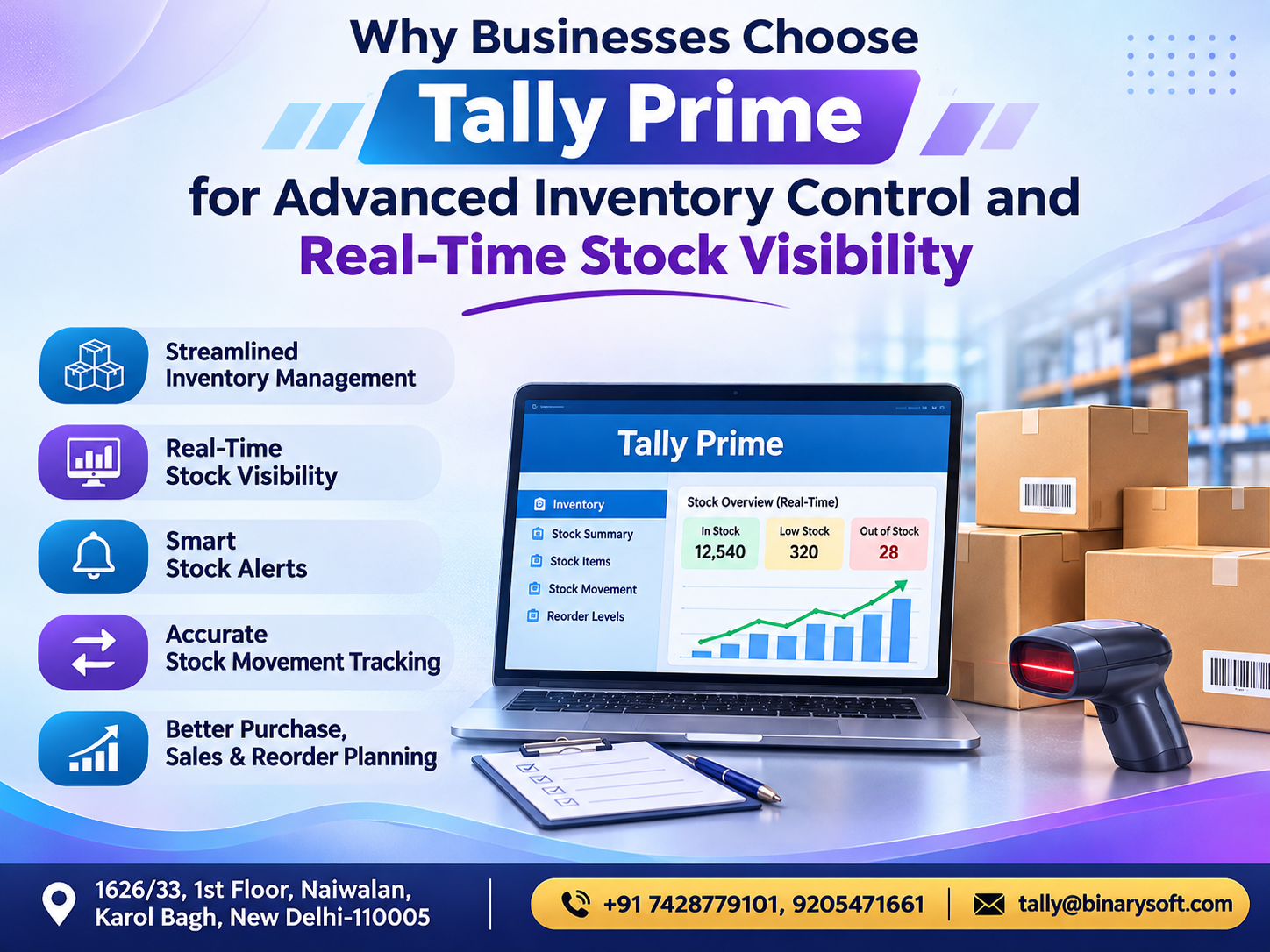
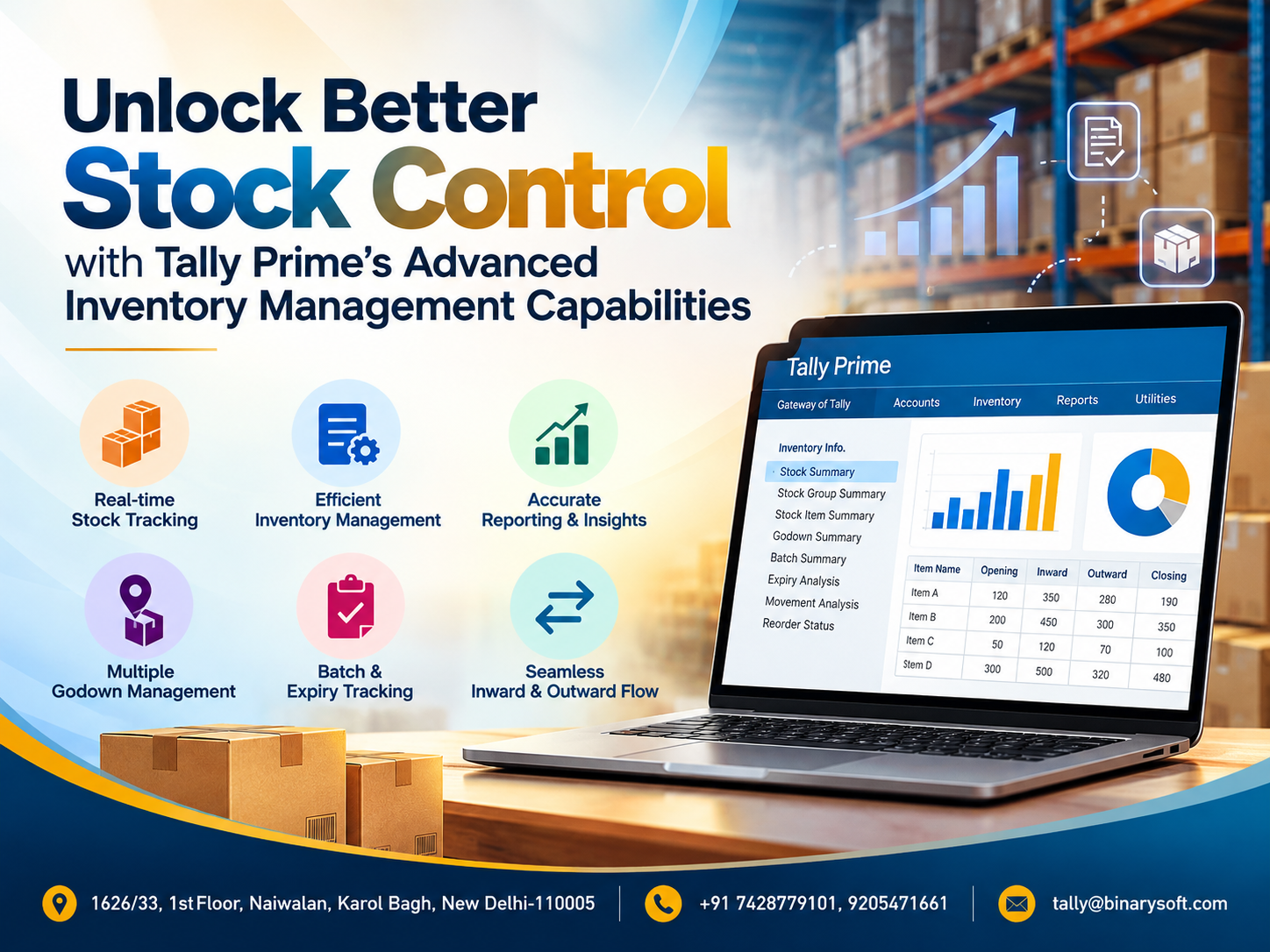
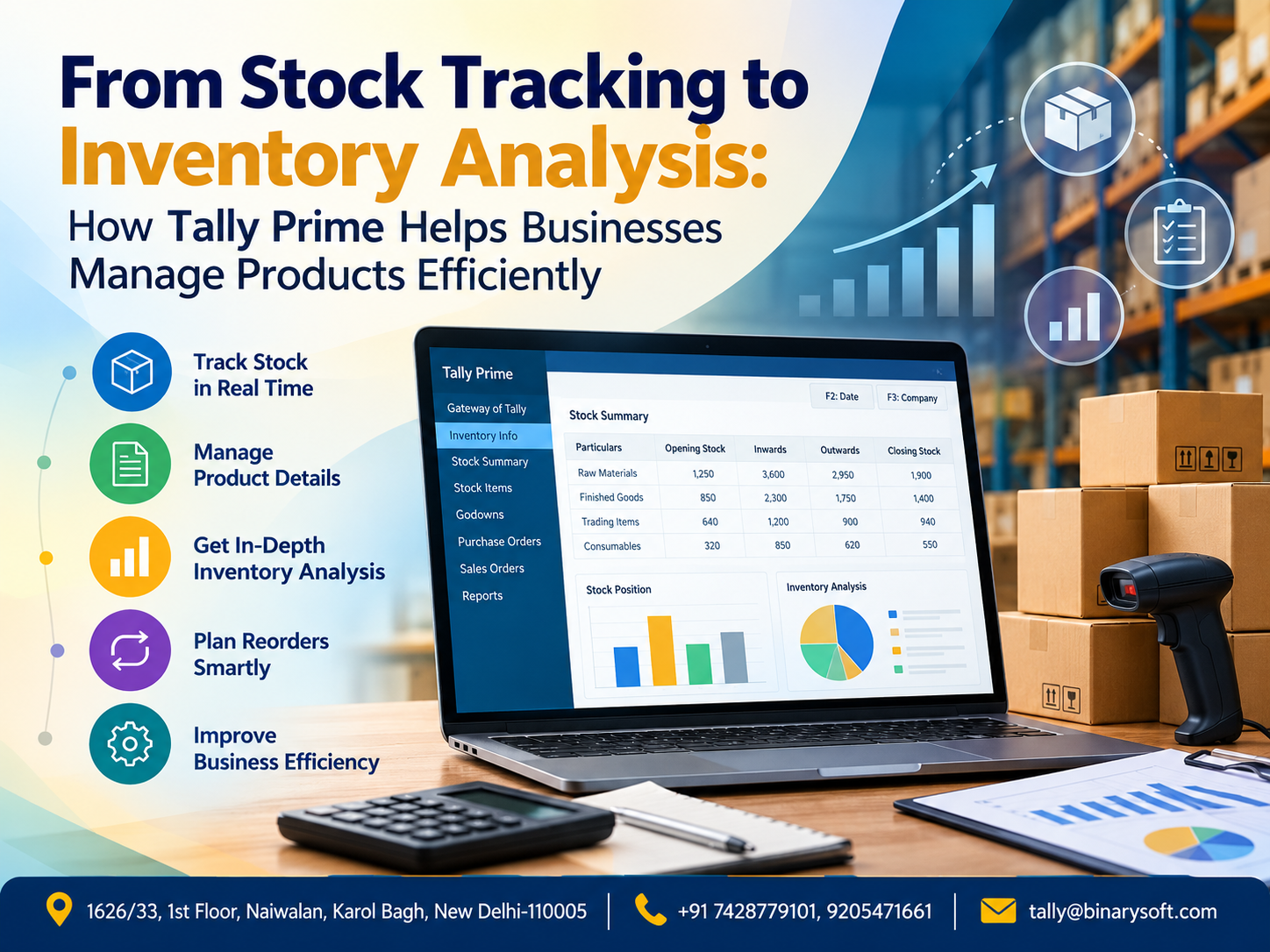
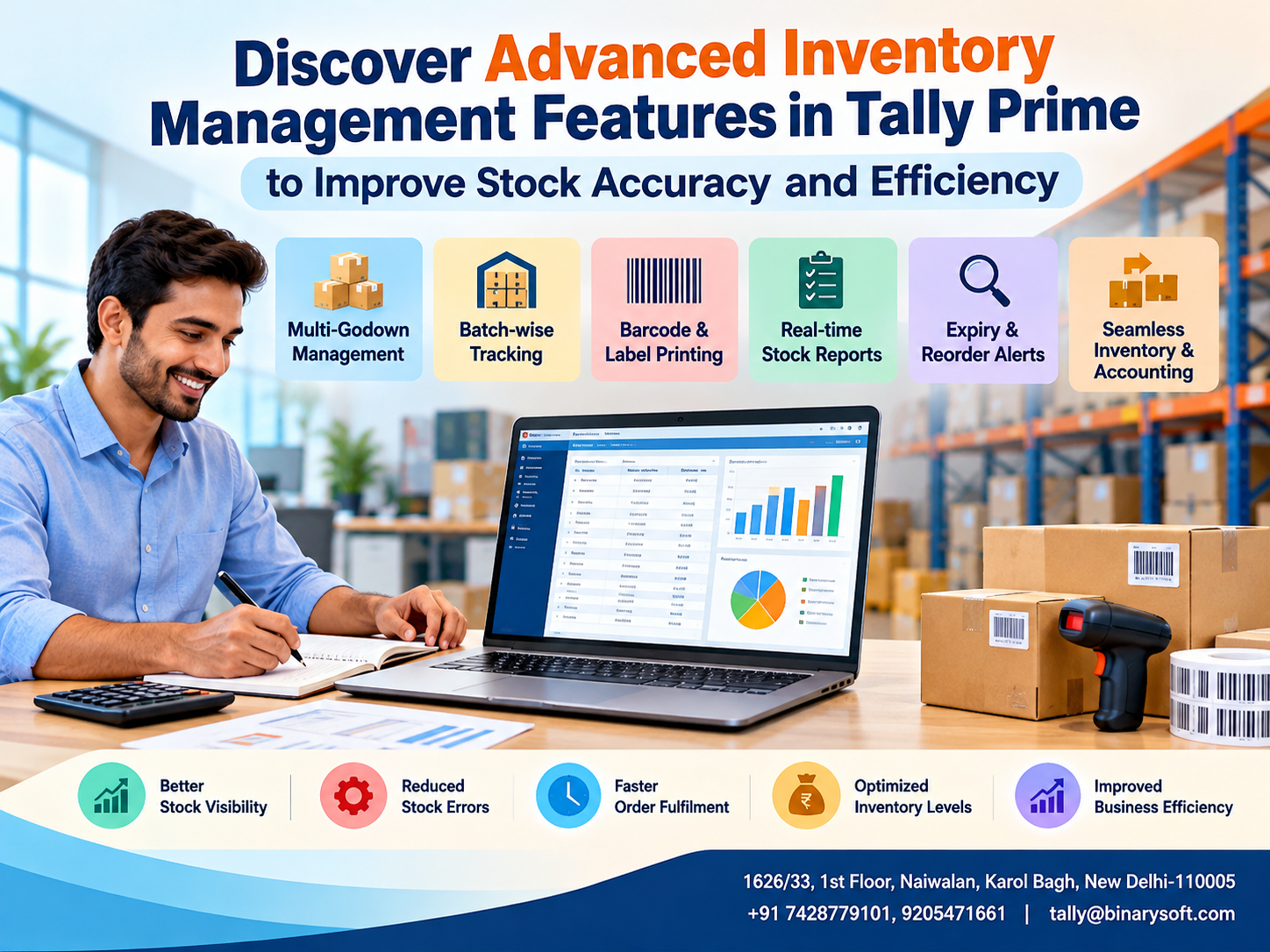
Tally Prime provides inventory features that help businesses maintain stock records and apply supported valuation methods.
Stock Item Management
Businesses can create stock items with relevant classifications and units.
Purchase Recording
Purchase vouchers help record quantities, rates and relevant inventory information.
Sales Recording
Sales vouchers can record stock movements when appropriately configured.
FIFO Valuation
Supported stock valuation options include FIFO-based costing.
Stock Summary
Businesses can review stock quantities and values.
Inventory Reports
Reports help examine relevant stock movements and balances.
Godown Management
Configured storage locations support location-wise inventory information.
Batch Details
Where applicable, batch-related features can support physical inventory tracking.
The accuracy of FIFO valuation depends on the quality of the underlying records.
13. How to Configure FIFO in Tally Prime
The following is a general workflow for supported configurations.
Step 1: Open Stock Item Masters
Navigate to the relevant stock item creation or alteration screen.
Step 2: Select the Stock Item
Choose the product for which valuation settings need review.
Step 3: Review Units and Classification
Verify that the stock item has appropriate master information.
Step 4: Locate Valuation Settings
Open the relevant costing or valuation method options.
Step 5: Select FIFO
Choose the supported FIFO valuation method where appropriate.
Step 6: Save the Configuration
Review the details before saving.
Step 7: Record Transactions
Enter purchases and sales accurately.
Step 8: Review Reports
Examine Stock Summary and relevant inventory valuation information.
Exact screen navigation may vary by software release.
Businesses should review the accounting implications before changing an established valuation method.
14. Case Study One: FIFO for a Packaged Food Distributor
Illustrative Case Study
Business Background
A distributor supplies packaged food products to retailers.
The Challenge
The company receives frequent deliveries and must manage products with different remaining shelf lives.
The Approach
Management introduces systematic warehouse rotation and batch monitoring.
Appropriate inventory valuation settings are reviewed in Tally Prime.
Employees maintain accurate purchase and sales records.
Expiry-sensitive dispatch decisions are managed through suitable operational controls.
Expected Outcome
The company can improve stock visibility and reduce avoidable errors in warehouse handling.
Business Lesson
FIFO costing and physical stock rotation should be coordinated, but they serve different purposes.
15. Case Study Two: FIFO Costing for an Electronics Wholesaler
Illustrative Case Study
Business Background
An electronics wholesaler purchases interchangeable accessories at changing prices.
The Challenge
Management needs a consistent inventory valuation policy.
The Approach
The company reviews applicable accounting requirements and selects a suitable costing method.
Purchase quantities and rates are recorded systematically in Tally Prime.
The accounting team monitors inventory values and reconciles stock regularly.
Expected Outcome
The business can improve consistency in inventory valuation and financial reporting.
Business Lesson
Accurate inventory-cost calculations depend on reliable purchase records and disciplined accounting practices.
Both case studies are illustrative rather than verified customer results.
16. FIFO and Indian Accounting Standards
Inventory valuation must follow the applicable accounting framework.
Under Accounting Standard 2, ordinarily interchangeable inventory items may be assigned costs using FIFO or weighted average methods, subject to the standard's requirements.
Entities applying Ind AS 2 must follow the corresponding provisions of that standard.
Inventory is generally measured at the lower of cost and net realisable value under these frameworks, subject to relevant requirements.
FIFO determines the cost assigned to inventory.
It does not remove the need to evaluate whether inventory values require adjustment.
Businesses should also apply accounting policies consistently.
Professional advice may be appropriate when selecting or changing valuation methods.
17. Common FIFO Inventory Mistakes
Businesses should avoid several errors.
Incorrect Purchase Dates: Transaction sequencing can affect cost-layer calculations.
Missing Opening Stock: Incomplete opening balances distort inventory valuation.
Incorrect Quantities: Stock differences affect cost allocation.
Wrong Purchase Rates: Incorrect costs produce misleading financial reports.
Unrecorded Returns: Purchase and sales returns may affect inventory layers.
Negative Stock: Unsupported or inconsistent negative quantities can complicate valuation.
Confusing FIFO with FEFO: Expiry-sensitive dispatch requires separate operational controls.
Changing Methods Without Review: Valuation changes may have financial reporting implications.
Regular reconciliation helps identify these issues.
18. Best Practices for FIFO Inventory Management
Businesses can strengthen inventory accuracy through consistent procedures.
Maintain clear stock item names and units.
Record purchases promptly with correct quantities and rates.
Review opening inventory before beginning a new accounting period.
Conduct regular physical stock verification.
Monitor stock movements across warehouses.
Use appropriate batch and expiry controls.
Investigate unusual inventory values.
Review purchase-price trends separately from reported cost of goods sold.
Document accounting policies and configuration changes.
Train employees responsible for inventory transactions.
These practices support more dependable stock and financial information.
19. How FIFO Affects Profit During Rising and Falling Prices
Purchase-price trends influence FIFO financial results.
When prices rise, FIFO generally assigns older, lower costs to goods sold first.
This may result in lower cost of goods sold and higher gross profit compared with some alternative valuation methods.
Closing inventory may reflect more recent, higher purchase costs.
When prices fall, the relationship may reverse.
However, the effect depends on the actual purchase sequence, sales quantities and inventory balances.
FIFO does not change the cash paid to suppliers or the revenue earned from customers.
It changes how relevant historical inventory costs are allocated for accounting purposes.
20. The Future of FIFO Inventory Management
Digital accounting and inventory systems are helping businesses maintain more detailed transaction records.
Organizations are exploring barcode workflows, batch monitoring, inventory analytics and automated reporting.
These tools can improve operational visibility when implemented appropriately.
However, software cannot compensate for missing or incorrect transaction information.
For businesses using Tally Prime, suitable inventory configuration and accurate records provide a foundation for reliable FIFO valuation.
Businesses with complex warehouse requirements may also consider specialized operational systems or suitable integrations.
The objective is to combine accurate inventory accounting with efficient stock handling.
Conclusion
FIFO is a widely used inventory valuation method that assigns the earliest available inventory costs to goods sold or consumed first.
It helps businesses calculate cost of goods sold, determine closing inventory values and maintain consistent financial reporting.
FIFO is relatively straightforward to understand, but accurate results depend on complete purchase records, correct quantities and appropriate accounting policies.
Businesses must also distinguish FIFO accounting from physical stock rotation and expiry-based dispatch procedures.
Tally Prime supports inventory accounting through stock masters, transaction recording, FIFO valuation settings and inventory reports.
When combined with disciplined warehouse processes and regular reconciliation, these capabilities help businesses maintain dependable stock information.
Effective FIFO management is not simply about identifying the oldest inventory cost. It is about maintaining accurate records, protecting inventory value and supporting informed business decisions.
Powered by Binarysoft Technologies
Authorized Tally Partner
Binarysoft Technologies helps businesses improve accounting and inventory management through Tally Prime implementation, configuration, customization, technical support and cloud-based accounting solutions.
Our services support retailers, wholesalers, manufacturers and distributors seeking reliable stock records and accurate inventory valuation.
Location:
1626/33, 1st Floor, Naiwalan, Karol Bagh, New Delhi – 110005, INDIA
Contact Us:
+91 7428779101, 9205471661
Email:
tally@binarysoft.com
Business Hours:
10:00 AM – 6:00 PM, Monday to Friday
Frequently Asked Questions
Does FIFO mean older physical stock must always be sold first?
Not necessarily. FIFO is an accounting cost-flow assumption. Physical stock rotation requires separate warehouse procedures.
Is FIFO suitable for perishable goods?
FIFO can support inventory costing, but expiry-sensitive goods may require FEFO and suitable batch or expiry controls for physical dispatch.
How does FIFO affect gross profit?
When purchase prices rise, FIFO may assign lower historical costs to goods sold, potentially increasing reported gross profit compared with some other costing methods.
Can FIFO be used for manufacturing inventory?
Yes. FIFO may be appropriate for eligible manufacturing inventory categories, subject to applicable accounting requirements.
CA. Praneet Bansaal is a Chartered Accountant with experience in taxation, accounting controls, and financial process reviews. He has advised businesses on aligning inventory movement with accounting and GST requirements. His content focuses on compliance, accuracy, and long-term sustainability.