Call CA Tally HelpDesk
+91 9205471661,
7428779101
Introduction: Why Managing Accounts Payable Is Essential for Business Success
Every successful business depends on strong relationships with suppliers, vendors and service providers.
Whether a company purchases raw materials, maintains retail inventory, pays contractors or manages operating expenses, supplier payments form an important part of daily financial operations.
However, as businesses grow, managing accounts payable becomes increasingly complicated.
A small retailer may receive only a few supplier invoices each week, while a manufacturing company may process hundreds of purchase bills every month.
Without a structured accounts payable process, businesses can experience missed payment deadlines, duplicate invoices, incorrect balances, supplier disputes and unexpected cash shortages.
These problems affect more than accounting accuracy. They can damage supplier relationships, interrupt operations and reduce business confidence.
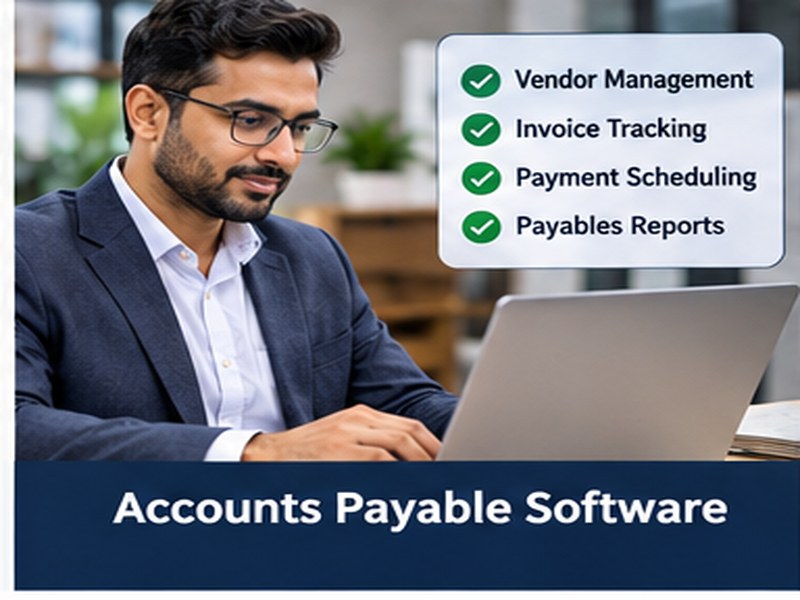
Accounts payable software helps businesses maintain organized supplier records, monitor payment obligations and manage outgoing payments more efficiently.
Tally Prime provides accounting capabilities that support purchase recording, supplier ledger management, bill-wise tracking, payment vouchers and outstanding payable reports.
When configured correctly, these features help businesses understand how much they owe, when payments are due and how their liabilities affect working capital.
This comprehensive guide explains accounts payable software, its important features, practical benefits, implementation considerations and how Tally Prime can help organizations improve supplier payment management.
1. What Is Accounts Payable Software?
Accounts payable software is a financial management application or system used to record, organize, track and manage amounts owed by a business to suppliers and other creditors.
Accounts payable generally arise when a company purchases goods or services on credit.
For example, a wholesale distributor purchases inventory worth ₹2,00,000 from a supplier with a payment term of 30 days.
The company receives the goods and supplier invoice immediately but pays the amount later.
Until the payment is made, ₹2,00,000 represents an outstanding liability.
Accounts payable software helps record this obligation and track it until settlement.
Common Accounts Payable Activities
-
Recording supplier invoices and purchase bills.
-
Maintaining vendor accounts.
-
Tracking invoice due dates.
-
Monitoring outstanding liabilities.
-
Recording supplier payments.
-
Adjusting debit notes and purchase returns.
-
Reconciling supplier statements.
-
Preparing payable reports.
-
Supporting cash flow planning.
A reliable accounts payable process helps organizations maintain financial discipline while preserving healthy supplier relationships.
2. How the Accounts Payable Process Works
The accounts payable process begins when a business purchases goods or services and ends when the corresponding payment is completed and reconciled.
Step 1: Purchase Requirement
A department identifies the need for goods or services.
For example, a manufacturing company may require additional raw materials.
Step 2: Purchase Order
The purchasing department may create a purchase order specifying the items, quantities, prices and delivery conditions.
Step 3: Goods or Services Received
The company receives the goods or confirms that the required services have been delivered.
Step 4: Supplier Invoice Received
The supplier issues an invoice containing relevant transaction details.
Step 5: Invoice Verification
The accounts team checks the invoice against supporting records, such as the purchase order and goods receipt.
Step 6: Liability Recording
After appropriate verification, the invoice is recorded as an amount payable to the supplier.
Step 7: Payment Scheduling
The company determines the payment date based on agreed credit terms and available funds.
Step 8: Payment and Reconciliation
The payment is recorded, matched against the relevant supplier invoice and reconciled with banking records.
This process helps maintain accurate liabilities and reduces the likelihood of payment disputes.
3. Why Businesses Need Accounts Payable Software
Better Control Over Supplier Payments
Accounts payable software helps businesses identify unpaid invoices and understand upcoming payment obligations.
Reduced Manual Accounting Work
Structured accounting processes reduce dependence on handwritten registers and disconnected spreadsheets.
Improved Financial Accuracy
Supplier balances, payment records and purchase transactions can be maintained in an organized accounting environment.
Stronger Supplier Relationships
Timely payments and accurate records help businesses maintain trust with vendors.
Better Cash Flow Planning
Knowing when supplier payments are due helps management plan cash requirements.
Improved Financial Reporting
Accounts payable information supports the preparation of financial statements and working capital analysis.
Easier Audit Preparation
Organized invoices, payment references and supplier records make transaction verification more efficient.
4. Important Features of Accounts Payable Software
Modern accounts payable solutions may provide different levels of automation and financial control.
The most useful features depend on business requirements and software capabilities.
Supplier Master Management
Supplier records contain important information such as business names, contact details, payment terms, tax information and account balances.
Maintaining accurate supplier masters reduces confusion and helps employees identify the correct vendor during transaction entry.
Purchase Invoice Recording
Accounts payable software allows businesses to record invoices received from suppliers.
Each transaction can include invoice numbers, dates, amounts, taxes and relevant accounting details.
Bill-Wise Outstanding Tracking
Bill-wise tracking helps identify which supplier invoices remain unpaid.
For example, a company may owe ₹5,00,000 to one supplier across five different invoices.
Instead of showing only the total balance, bill-wise reports can help identify individual outstanding obligations.
Payment Due Date Monitoring
Payment terms are essential for cash flow planning.
A business may negotiate credit periods of 15, 30, 45 or 60 days with different suppliers.
Tracking these terms helps management identify upcoming obligations.
Supplier Payment Recording
Businesses can record payments through appropriate accounting vouchers.
Payment references can then be adjusted against relevant outstanding invoices.
Debit Note Management
Debit notes may be required when goods are returned or supplier invoices require adjustments.
Proper recording helps maintain accurate supplier balances.
Payables Reporting
Outstanding reports provide management with information about supplier liabilities.
These reports support payment planning, reconciliation and financial reviews.
Approval and Automation Capabilities
Some dedicated accounts payable platforms provide invoice scanning, approval routing, automated document matching and payment scheduling.
These features should not automatically be assumed to be available natively in every accounting application.
Tally Prime provides core accounting and payable tracking capabilities. Advanced document capture, approval workflows or unattended payment automation may require additional solutions or integrations.
5. How Tally Prime Helps Businesses Manage Accounts Payable
Tally Prime supports accounts payable management through integrated purchase accounting, supplier ledgers, bill-wise details and payment recording.
Purchase Voucher Management
Businesses can record purchases using purchase vouchers.
These transactions can capture supplier details, purchase amounts, applicable taxes and inventory information.
Supplier Ledger Management
A separate ledger can be maintained for each supplier.
This helps accountants review purchase transactions, payments and outstanding balances.
Bill-Wise Accounting
When bill-wise tracking is enabled and properly configured, Tally Prime allows businesses to maintain references for individual supplier invoices.
This helps identify unpaid bills and allocate payments against specific obligations.
Outstanding Payables Reports
Tally Prime provides reports that help businesses review amounts owed to suppliers.
Accountants can examine outstanding references and payment obligations.
Payment Voucher Recording
Payments made to suppliers can be recorded through payment vouchers.
Relevant bill references can be selected or adjusted according to the accounting workflow.
Debit Notes and Purchase Returns
Businesses can record appropriate purchase return or debit note transactions.
These adjustments help maintain accurate supplier accounts.
Financial Reporting
Accounts payable balances contribute to the company's liabilities and working capital position.
Tally Prime's Balance Sheet and related accounting reports help management review these obligations.
6. How to Manage Accounts Payable in Tally Prime: Step-by-Step
The following procedure outlines a typical payable management workflow.
Step 1: Create the Supplier Ledger
Open Tally Prime and select the relevant company.
Navigate to the ledger creation option and create a supplier account under Sundry Creditors.
Enter the required supplier details and configure bill-wise tracking where applicable.
Step 2: Record the Purchase Invoice
Open a Purchase Voucher and select the supplier ledger.
Enter the purchase details, invoice reference, date, items or expense accounts, and applicable taxes.
Save the voucher after verifying the information.
Step 3: Maintain the Bill Reference
When bill-wise accounting is enabled, record the supplier invoice using an appropriate new reference.
This helps track the invoice until payment.
Step 4: Review Outstanding Payables
Navigate to the relevant outstanding payable report.
Review supplier balances, bill references and due dates.
Step 5: Record the Supplier Payment
Create a Payment Voucher.
Select the appropriate bank or cash ledger and the supplier account.
Adjust the payment against the relevant outstanding bill reference.
Step 6: Verify the Remaining Balance
Review the supplier ledger and outstanding report to confirm that the payment has been recorded correctly.
Step 7: Reconcile the Transaction
Compare accounting entries with bank statements and supplier records.
Menu paths and available options may differ depending on the Tally Prime version and company configuration.
7. Accounts Payable Example: Understanding Supplier Liabilities
Consider a trading company that purchases goods from three suppliers.
|
Supplier
|
Invoice Amount
|
Payment Terms
|
Amount Outstanding
|
|---|
|
Supplier A
|
₹1,50,000
|
30 days
|
₹1,50,000
|
|
Supplier B
|
₹2,25,000
|
45 days
|
₹2,25,000
|
|
Supplier C
|
₹1,75,000
|
15 days
|
₹1,75,000
|
|
Total
|
₹5,50,000
|
|
₹5,50,000
|
The business has total accounts payable of ₹5,50,000.
However, all payments are not necessarily due on the same date.
By reviewing bill-wise outstanding information, management can identify which obligations require immediate attention.
This helps the company plan payments without unnecessarily reducing its cash reserves.
8. Accounts Payable vs Accounts Receivable
Accounts payable and accounts receivable are both important components of working capital management.
However, they represent opposite sides of financial transactions.
|
Particulars
|
Accounts Payable
|
Accounts Receivable
|
|---|
|
Meaning
|
Money owed to suppliers
|
Money owed by customers
|
|
Accounting Nature
|
Liability
|
Asset
|
|
Transaction Origin
|
Credit purchases
|
Credit sales
|
|
Main Objective
|
Manage outgoing payments
|
Collect incoming payments
|
|
Financial Impact
|
Future cash outflow
|
Expected cash inflow
|
|
Tally Prime Reports
|
Outstanding Payables
|
Outstanding Receivables
|
Businesses should monitor both accounts payable and accounts receivable.
A company may have strong sales but still face cash shortages if customer payments are delayed while supplier payments become due.
Coordinating both processes supports better working capital management.
9. An Emotional Story: The Supplier Payment That Almost Ended a Business Relationship
Vikram operated a growing electrical equipment distribution business in Delhi.
His father had started the business with a small shop and a handful of trusted suppliers.
Over the years, Vikram expanded the company into wholesale distribution.
The business handled larger orders, employed more people and supplied products to customers across several markets.
But growth introduced new accounting challenges.
Supplier invoices arrived through email, messaging applications and physical documents.
Some bills were recorded immediately, while others were entered several days later.
One morning, Vikram received an unexpected call from a supplier who had supported his family business for nearly twenty years.
The supplier explained that several invoices were overdue.
Vikram was surprised.
He believed the payments had already been processed.
After checking with his accounting team, he discovered that some payments had been recorded without being correctly adjusted against the corresponding invoice references.
The supplier was frustrated and temporarily stopped further credit supplies.
For Vikram, the situation was deeply upsetting.
The supplier was not simply a vendor. He was someone who had trusted his father when the business was struggling.
Vikram realized that poor payment tracking could damage relationships built over decades.
He worked with his accountant to reorganize supplier ledgers and introduce bill-wise payable tracking in Tally Prime.
The team verified outstanding invoices, reconciled supplier statements and established a weekly payment review process.
Employees were trained to record invoice references consistently and adjust payments against the correct bills.
Over time, the business developed a clearer view of its payment obligations.
Supplier disputes became easier to investigate, and Vikram could plan payments with greater confidence.
He learned that financial management was not only about maintaining accounts.
It was also about protecting trust.
This is an illustrative story showing how structured payable management can affect business relationships.
10. Case Study 1: Wholesale Distributor Improves Supplier Payment Tracking
Business Type: Electrical Goods Wholesale Distribution
Location: New Delhi, India
Challenge: Difficulty tracking supplier invoices and overdue payments.
A medium-sized distributor purchased inventory from multiple suppliers.
The accounting team maintained supplier balances but often relied on separate spreadsheets to track invoice due dates.
As purchase volumes increased, identifying overdue bills became more time-consuming.
The Solution
The company introduced a structured accounts payable process using Tally Prime.
The implementation included creating accurate supplier ledgers, enabling bill-wise tracking, recording purchase invoice references and reviewing outstanding payables regularly.
The company also introduced weekly supplier statement reconciliation.
The Outcome
Accountants could identify unpaid invoices more efficiently.
Management gained better visibility into upcoming payment obligations.
The organization also developed more consistent procedures for recording and adjusting supplier payments.
Key Learning: Bill-wise tracking and regular reconciliation can improve payable management without requiring unnecessarily complicated processes.
This is an illustrative case study, not a verified customer implementation.
11. Case Study 2: Manufacturing Company Strengthens Cash Flow Planning
Business Type: Packaging Materials Manufacturing
Location: Pune, Maharashtra
Challenge: Irregular supplier payments and limited visibility into future liabilities.
A manufacturing company purchased raw materials, packaging supplies and maintenance services from several vendors.
Its accounts department recorded purchases but lacked a consistent process for reviewing payment due dates.
This sometimes created pressure on available cash.
The Solution
The company standardized purchase accounting and supplier payment procedures in Tally Prime.
Its finance team began reviewing outstanding payables by supplier and due date.
Management also compared upcoming supplier obligations with expected customer collections.
Payment schedules were prepared based on contractual terms and cash availability.
The Outcome
The business developed a more organized approach to working capital planning.
Financial managers could anticipate major payment requirements and communicate more effectively with suppliers.
The company also improved the consistency of its payable reconciliation process.
Key Learning: Accounts payable management is most effective when integrated with broader cash flow planning.
This case study is illustrative. Actual outcomes depend on implementation and business conditions.
12. How Accounts Payable Software Improves Cash Flow Management
Cash flow management is one of the most important benefits of organized accounts payable processes.
A business must maintain enough liquidity to pay suppliers, employees, lenders and other obligations.
However, paying every invoice immediately may not always be the most efficient use of available funds.
When suppliers offer agreed credit periods, businesses can plan payments according to those terms.
Accounts payable information helps management understand upcoming cash requirements.
For example, a company may have ₹10 lakh in its bank account and ₹7 lakh in supplier payments due over the next 30 days.
Management must also consider salaries, rent, taxes and other expenses before deciding how to allocate funds.
Tally Prime's outstanding payable reports can support this analysis by providing information about supplier obligations.
Businesses can combine these reports with receivables, bank balances and cash flow forecasts to develop payment plans.
The objective is not to delay legitimate payments unnecessarily.
It is to meet financial commitments while maintaining sufficient liquidity for ongoing operations.
13. Understanding Accounts Payable Aging Reports
Accounts payable aging is the process of grouping unpaid supplier invoices according to how long they have been outstanding or overdue.
Aging analysis helps businesses identify liabilities requiring attention.
An illustrative report may contain the following categories:
|
Aging Category
|
Outstanding Amount
|
|---|
|
Current / Not Yet Due
|
₹3,00,000
|
|
1–30 Days Overdue
|
₹1,50,000
|
|
31–60 Days Overdue
|
₹75,000
|
|
61–90 Days Overdue
|
₹40,000
|
|
More Than 90 Days Overdue
|
₹35,000
|
|
Total
|
₹6,00,000
|
This information helps management prioritize supplier communication and investigate older balances.
Tally Prime's bill-wise outstanding and age-related reporting capabilities can support payable analysis, depending on configuration and reporting options.
Businesses should clearly distinguish invoice age from days overdue because these are different measures.
14. Common Accounts Payable Challenges and Solutions
Duplicate Supplier Invoices
Duplicate invoices may result in incorrect liabilities or accidental double payments.
Businesses should verify supplier invoice numbers and review existing records before processing new transactions.
Missing Invoice References
Without consistent references, matching payments to invoices becomes difficult.
Bill-wise accounting can help maintain transaction-level information.
Delayed Approvals
Purchase invoices may remain unpaid because supporting documents have not been verified.
Businesses should establish clear invoice review and approval responsibilities.
Incorrect Supplier Balances
Differences may arise from unrecorded debit notes, incorrect payments or missing invoices.
Regular supplier statement reconciliation helps identify discrepancies.
Poor Payment Planning
Unexpected payment obligations can create cash shortages.
Outstanding reports should be reviewed alongside cash flow forecasts.
Weak Internal Controls
Unrestricted access to supplier records or payment processes increases financial risk.
Businesses should separate responsibilities where practical and restrict sensitive accounting operations.
15. Best Practices for Efficient Accounts Payable Management
Businesses should establish a consistent process for receiving, verifying, recording and paying supplier invoices.
Supplier masters should be reviewed periodically to ensure that account details remain accurate.
Every purchase invoice should have a clear reference and appropriate supporting documentation.
Payments should be recorded against the correct outstanding bills.
Organizations should also reconcile supplier statements regularly.
For higher-value transactions, management approval and independent verification may be appropriate.
Bank account changes requested by suppliers should be independently confirmed through trusted communication channels.
These controls help reduce the risk of incorrect or unauthorized payments.
Tally Prime can support the accounting and reporting components of these procedures, while additional approval or document management requirements may need complementary processes or software.
16. Accounts Payable Automation: What Can Be Automated?
Accounts payable automation can involve several different activities.
These may include invoice data capture, document verification, approval routing, accounting entry creation, payment scheduling and reconciliation.
The level of automation depends on the software and integration environment.
Tally Prime supports structured purchase accounting, supplier records, bill-wise references and payment transactions.
Additional automation may be developed through compatible integrations or customized solutions.
For example, an organization may use a separate invoice management application to collect supplier bills and obtain approvals.
After validation, approved information may be transferred into Tally Prime through an appropriate integration process.
Businesses should ensure that automated workflows include duplicate detection, error handling, transaction logs and financial controls.
Automation should reduce repetitive work without removing necessary verification.
17. Important Accounts Payable Performance Indicators
Businesses can use several financial indicators to evaluate payable management.
Days Payable Outstanding (DPO)
DPO estimates the average number of days a business takes to pay suppliers.
A common formula is:
\[ \text{DPO}=\frac{\text{Average Accounts Payable}}{\text{Cost of Goods Sold}}\times\text{Days in Period} \]
For businesses where cost of goods sold is not a suitable denominator, an appropriately defined credit purchases measure may be used.
A higher DPO may indicate longer supplier credit periods, but it can also signal payment delays.
Overdue Payables Percentage
This measures the proportion of supplier liabilities that have passed their payment due dates.
Invoice Processing Time
This measures the time required to process a supplier invoice from receipt to approval or posting.
Duplicate Payment Rate
This measures the frequency of duplicate payments relative to the relevant transaction population.
Supplier Reconciliation Differences
Monitoring unresolved differences between supplier statements and accounting records can help identify control weaknesses.
These indicators provide useful information when reviewed consistently.
18. Why Accounts Payable Management Matters for Growing Businesses
As businesses expand, purchase volumes and supplier relationships often become more complicated.
A small company may initially manage invoices using basic spreadsheets.
However, this approach can become difficult when transaction volumes increase.
Structured payable management helps organizations maintain control over liabilities and payment commitments.
It also supports financial reporting and working capital planning.
For manufacturing businesses, supplier payment reliability can affect raw material availability.
For wholesalers, timely payments can influence purchasing arrangements and credit limits.
For service businesses, payable management helps maintain relationships with contractors and service providers.
In every case, organized financial records provide a stronger foundation for sustainable growth.
19. How Binarysoft Technologies Can Help with Tally Prime Accounts Payable Management
Businesses often need assistance configuring accounting software to match their purchasing and payment processes.
Binarysoft Technologies, an Authorized Tally Partner, can assist organizations with Tally Prime setup, supplier ledger configuration, bill-wise accounting, purchase voucher management and financial reporting guidance.
Businesses can also seek assistance in understanding outstanding payable reports, organizing accounting records and establishing consistent payment tracking procedures.
The objective is to help organizations improve accounting accuracy, strengthen supplier payment visibility and maintain dependable financial information.
20. Conclusion: Build Stronger Supplier Relationships with Better Accounts Payable Management
Accounts payable management is an essential part of financial control.
Businesses must understand how much they owe, when payments are due and how supplier obligations affect cash flow.
Without organized payable records, companies may experience payment delays, duplicate transactions, supplier disputes and financial uncertainty.
Accounts payable software helps organizations maintain structured supplier information and monitor outstanding liabilities.
Tally Prime supports these requirements through purchase vouchers, supplier ledgers, bill-wise tracking, payment recording and financial reports.
When combined with regular reconciliation, appropriate approvals and cash flow planning, these capabilities can improve the reliability of payable management.
Efficient accounts payable management is not simply about paying bills. It is about protecting business relationships, maintaining financial discipline and supporting long-term growth.
For growing organizations, investing in accurate accounting processes can make supplier management more predictable and business decisions more informed.
Powered by Binarysoft Technologies
Authorized Tally Partner
Location: 1626/33, 1st Floor, Naiwalan, Karol Bagh, New Delhi – 110005, INDIA
Contact Us: +91 7428779101, 9205471661
Email: tally@binarysoft.com
Business Hours: 10:00 AM – 6:00 PM, Monday–Friday
Frequently Asked Questions
Does Tally Prime automatically pay suppliers?
Tally Prime supports payment recording and certain banking workflows. Fully automated supplier payment execution should not be assumed and depends on supported banking services or additional integrations.
How do I check outstanding supplier payments in Tally Prime?
Businesses can use the relevant outstanding payables reports to review supplier balances and unpaid bill references.
What is accounts payable software?
Accounts payable software helps businesses record, organize and manage money owed to suppliers and other creditors.
What is accounts payable in accounting?
Accounts payable represents amounts a business owes for goods or services purchased on credit.
CA. Rishubh Talrejaa specializes in GST, business accounting, and compliance advisory for growing enterprises. With experience in handling real-time transactional data and audits, he writes practical insights on inventory control, taxation, and digital transformation for Indian businesses operating in competitive markets.